-
Relationships Among Local and Topical and Milieus
Over the past decade or so, I have been increasingly emphasizing that the languages we speak belong to the linguistic communities we participate in.
A few days ago, I was a little thrilled to be vindicated when Adam Curry declared what I wish to refer to as his cardinal rule of podcasting:
Be about your community.
No Agenda Show Episode #1795, 2:24:18 [ https://www.noagendashow.net/listen/1795/transcript?t=2:24:18 ]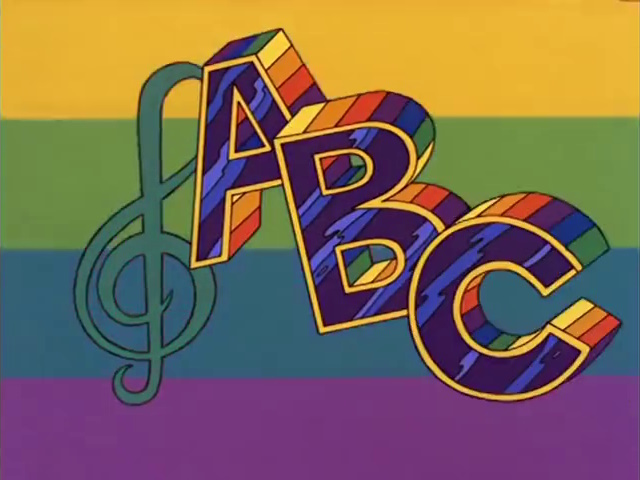
Still image from “Jackson 5ive”, episode 1 (“It All Started With…”) I do want to acknowledge that Adam’s remarks were actually addressing what he refers to as “Hyper-Local podcasts”.
At the same time, I also want to acknowledge an observation about business communications made by a couple acquaintance(s) who told me (about 2 decades ago, so please forgive me for not recalling the exact words):
Local is no longer a term limited to the geographical conceptualization of location.
Jim Salmons and Timlynn Babitsky, somewhere on the Internet, a long time ago (for more information, please refer to http://www.sohodojo.com )Over the intervening years, I have become ever more of an advocate for this perspective … and I feel this is somewhat the perspective found at the intersection of three avenues of thinking arising from the views referred to as “local”, “topical” and “milieu”.
Let me try to elucidate how these three views are related by describing a situation we are all familiar with from our childhood (and also from early adult years). The scene is that of a school, or perhaps also a college or university. You are the pupil or student walking though a building towards the classroom of a class you’re enrolled in. As you walk, you pass other classrooms with other classes. Perhaps you hear a few words from inside — but since you have hardly any context, these words don’t really affect you in any way. You distinctly recognize that you do not “belong” to these classrooms. These rooms do not feel like home. The topics being discussed are relatively meaningless to you. If you do happen to spend some time following such a “foreign” discussion, it may seem odd or strange, perhaps even alien.
This alienation need not be strong, nor need it even be clear or obvious, but still it is completely clear that this is not “your” classroom. If for some reason the physical location of your classroom was different on some day, you would have no doubt whatsoever regarding where you belong.
You belong where your people understand you, speak the same language, are familiar with the same jargon. The location isn’t really important. What’s far more important is the community … and the fact that we feel we belong here is not just a matter of the linguistic community we are members of, our milieu is also the community we associate with, participate in activities together with, these are the people we “hang out” with, engage with, etc..
I also strongly feel that people generally belong to several milieus — even though many people might seem to behave as if milieus might be mutually exclusive. The irony of “mainstream” media is precisely that: in the mainstream attempt to speak to (i.e. “reach”) everyone, mainstream media lack the coherence with which a members of a linguistic community will engage with other members in the same milieu.
-
All Through Our Existence: The – A – My
I am somewhat surprised that what I intend to write about this week may indeed not be a HUGE leap from what I wrote about last week. Many things have been going through my mind — or maybe I should say: many influences.
When I finally came up with the title for this post, it was undoubtedly “under” the influence of The Beatles. I think my point today could have been a song the Beatles never got around to recording, but at some point may very well have done so. Obviously (to me at leat), the influence of their own song “I Me Mine”,
which they bellowed out atop that London rooftop (which was apparently their last “live” appearance on the planet)even though they apparently didn’t play this song during their rooftop concert, is (to me at least) undeniable.Yet again: although not completely different, I think today’s topic is different enough.
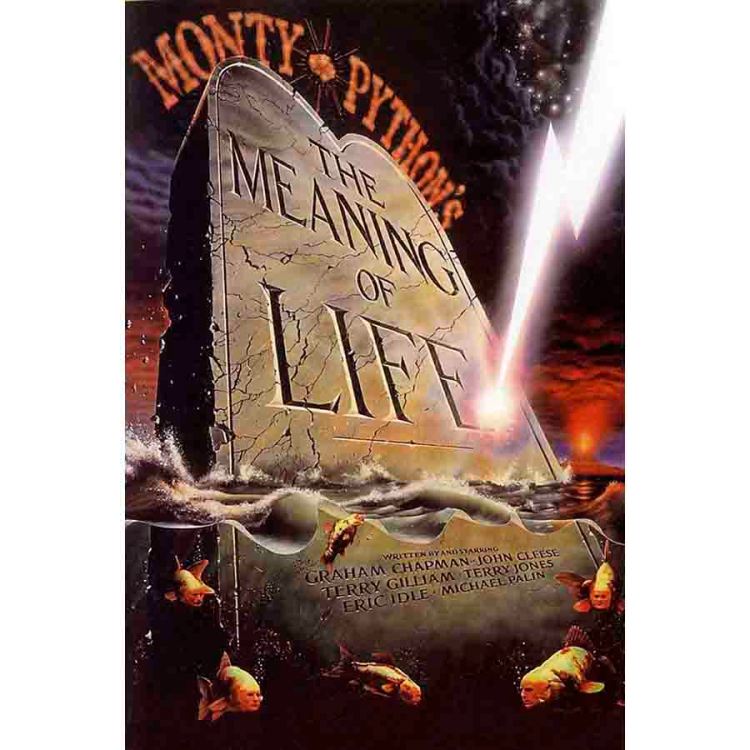
Source: https://www.montypython.com/film_Monty%20Python’s%20The%20Meaning%20of%20Life%20(1983)/17 Another influence is — up to this point — “only in my head”. That’s Monty Python’s “The Meaning of Life” (1983). Lately, I have been pondering something like “The Meaning of Life” … I want to explicate this some more, but first I want to address something I find particularly curious about the exact wording of the title.
“THE“: is this the only definite article (in English)? The declares: there is one, there is only one and there is no “other“. Not “another” one. If there was an other, then English speakers would presumably be forced to use an indefinite article (of which I am only currently aware of “a” — and also the “an” variant). Now I wish to make my so-called “curiosity” fully clear: beyond the indefinite article, exists yet another thing English speakers use every now and then: My.
By the way: The reason I refer to these things as “curiosities” is because these (and many other similarly “curious”) observations can hardly be monetized. If something can’t be monetized, it also seems to be non-factual — instead: an opinion, or (perhaps even less than that) a mere curiosity.
On the other hand, I find it downright phenomenal that a phrase like “the meaning of life” would be so easily understandable. I mean: if someone were to attempt explaining “the meaning of life” to a living dog, I think the dog would probably cock their head to one side as if to say “come again?” [1] My hunch is that many or even most people will very easily think of the phrase “the meaning of life”, although what they have in their minds is much more akin to “my meaning of my life“.
[1] See also “Celebrity Talk Show“
-
Literacy & Publicacy
Literacy and publicacy go hand-in-hand.
The way I see the relationship between literacy and publicacy goes like this: Literacy is the ability to know what others have made public; Publicacy is the ability to know how to make something public.
I think eventually the Twentieth Century will go down in history as a strange time when the widespread trust in corporate progress created phenomenal brand-name behemoth corporations which wielded immense power over the “public psyche”. [1]
At some point, these fictional personas will eventually create such fantastic narratives in their attempts to win competitively versus their corresponding competitors, that the mesmerized populace will ultimately become sick and feverishly shake their heads, or perhaps even tremble and quake all over in a quasi-animalistic attempt to “shake it off” and free themselves from the psychological burdens of constant mainstream propaganda immersion.

Source: some popular video platform search result for taylor swift shake it off Yet this is the kind of yarn of my own which my mind creates on a typical Sunday morning when I let it run rampant. Let me try to bring it back down to Earth by mentioning something not completely different yet different enough to seem more-or-less rational.
Time and again I will receive comments on some of my blogs in which some youngster who is not well-versed in either literacy or publicacy skills will demand that I “take down” some of my own content — because I quoted something they have themselves published (and which they therefore feel they own, such that I must ask their permission in order to quote something they themselves have attempted to make public). [2] Never mind that usually these youngsters seem to have never ever before received any attention from any somewhat conscious life-form at all.
Well, OK — that may be a rather extreme opinion of my own. And yet I find it quite difficult to fathom how shallow the world view that I might need to ask permission for me to simply make an observation about what I feel — from my own perspective — is going on somewhere in the world. About something that has been published. Made public (at least potentially). In the free and open marketplace of ideas which exists in the so-called “cyber-space” more commonly known as the WWW (world-wide-web), sometimes referred to (or “also known”) as THE INTERNET.
[1] Granted, this is (at best) little more than a hypothesis.
[2] See e.g. “I want to ease back in and see what I feel like doing or not, without stressing out about what I *should* be doing, but rather on what I *want* to do” [ https://wants.blog/2025/08/07/i-want-to-ease-back-in-and-see-what-i-feel-like-doing-or-not-without-stressing-out-about-what-i-should-be-doing-but-rather-on-what-i-want-to-do ]
-
Natural Orientation
Today nearly everyone is focused on living in the present. Presence is the place and state of mind in which many people want to be at all times.
That may very well be all good and fine, but still we should also keep in mind our orientation. Orientation is a word with very strong connotations. If there is such a thing as “originally“, then I guess it originally meant something like “facing eastwards”. Because it plays a significant role in many religions, it also has the corresponding religious connotations.
Yet the orientation I have in mind is whether we use our outlook from the present towards the future or towards the past. To me, it seems quite ironic that most scientific orientations look towards the past. The basic idea of science, after all, is that things will probably continue to happen in the future the way they have always happened in the past, and therefore if we analyze the observations from the past then we may be able to “predict the future” (I put that in quotes to pay homage to a scientist who has had a great influence on much of my own thinking — E.F. Schumacher, who published a series of essays a little over half a century ago, one of these essays being titled “A Machine to Predict the Future” [1] ).
Several decades ago I was very prone to alert many people I came into contact with that humans are the only species so far to produce vast quantities of plastic and nuclear waste. Try looking either of those processes up in some kind of historical tome that does not involve humanity! [2]
Focusing in a little more on humanity, let’s consider for a moment what motivates the actions we humans tend to get engaged in. For most humans, I guess, we are motivated by something like “optimization” of the rest of our lives. In general, thinking about the past seems like a waste of time. Our natural inclination is indeed even more future-oriented insofar as our own level of satisfaction is influenced by the level of satisfaction of our offspring. In many countries, it seems as if that “offspring-bonus” towards future orientation is currently waning — one might even argue: to an unsustainable degree.

Source: https://en.wikipedia.org/wiki/Frederick_Jackson_Turner Yet what I myself find most worrisome is an overall trend over the past few centuries, I think first succinctly identified by the historian Fredric Jackson Turner (which is now commonly referred to as Turner’s “Frontier Hypothesis”) — that the freedom experienced anywhere is the result of a frontier, which extends beyond civilization’s borders. In particular, I would argue that there is corollary to this frontier hypothesis, namely that the freedom experienced on the frontier usually leads humans to increase the rate of extinction there above the average rates of extinction at which humans destroy the natural environments surrounding what they call “home”.
[1] See the quite cheap paperback book titled “Small is Beautiful” (or also copies of it available online — see e.g. https://en.wikipedia.org/wiki/Small_Is_Beautiful )
[2] Obviously, I am focusing on our so-called natural habitat, commonly referred to as “Earth”. I have very little idea what happens on other planets and / or other so-called “celestial bodies”
-
Every Point of View is Parochial
Nobody is “well informed“. If you believe to be well-informed and you are no longer a child, then it is now time for you to give up on that myth.
Many people seem to think they are well-informed on account of paying attention to mainstream media (see also “Mainstream Milieus“). Of course the spinners of the mainstream myth go up to people wearing fancy clothes and point their cameras at them and stick their microphones in their faces in order to appear as if they are providing their consumers with infomation — this is undoubtedly a hoax. Quite often when someone is standing on a stage or in front of a podium, with all the cameras and microphones pointed at them, they will say obvious bullshit — such as “we are doing everything humanly possible to assure the health, safety and well-being of [whatever social group they are purporting to be concerned about]” .. and this is obviously false. This is false because they do not say things like “we have sacrificed 10 lambs, and I have also personally sacrificed all of my own children [since that is what some hocus-pocus deity required]”. They aren’t doing everything. They aren’t telling everything. They are probably doing many things that they want you to ignore, and which they will not tell you about, and that you therefore remain uninformed about.
I became acutely aware of this phenomenon when about a week ago the information that “The Macrons” have decided to sue (and are now apparently indeed suing) Candace Owens. The details of the accusations being thrown in both directions across the pond need not concern us here, but I will say this much about it: a large part of the issues around the case seem to focus on whether particular pieces of information should be either publicized or kept private.

Source: https://candaceowens.com/about Personally, I feel I became aware of the case because of my interest in information (and therefore also in censorship-related issues). I regret to admit being “sucked in” to paying attention to what Ms. Owens and also many of her colleagues were saying about her “right” to express her own opinion. The reason why I regret it is because I normally do not pay attention to irrational media (which are based on brand names [1]).
Luckily, I can say now that I feel I have already recovered quite well from some of my worst experiences due to having exposed my brain to such a large amount of irrational media over the past week. 🙂
As alluded to above, I believe humans are very prone to being influenced by “milieu” effects, The most obvious “milieu” effect is certainly the language(s) we choose to use for communications. Yet I think there are probably many more. One which I personally find particularly intriguing is the “western” (and/or “capitalist”) concepts of production and consumption. I feel it is quite obvious that in this system “propaganda” and “well-informed” go hand-in-hand. [2]
[1] See also “Rational Media” [ https://phlat.design.blog/2024/01/14/rational-media ]
[2] See “What is Publicacy + Why Does It Matter?” and also “Propaganda Information Technology vs. Indigena Information Technology — the Basic Idea” [ https://indigenous.news.blog/2022/05/07/propaganda-information-technology-vs-indigena-information-technology-the-basic-idea ]
-
On the Internet …
One thing that irritates me time and again is when someone tells me they saw something “on the Internet”. It’s an insult to humanity to have such a low degree of literacy.
In order to begin to understand how absurd such a statement is, consider how you would feel if someone talked to you about something, and if you asked them to state the source of their information, then they told you “paper” … or “a piece of paper” … or anything like that.
I get it: Airheads exist. One of my high school history teachers was sort of hot, and also an airhead. She actually once divulged to the class that she had appeared on the TV program titled “The Dating Game”. I also recall that she mentioned my name in class every now and then — for example when she drew attention to me by comparing me to “Roundheads” (i.e. that I had a round head) — it actually never occurred to me back then to consider whether she might have had the hots for me! 😛
But I digress … .
When airheads say things like “on the Internet”, their completely lacking literacy skills scream out throughout the rooms wherever they are allowed to make such statements. Rather than put them up in front of a firing line, I suggest we should simply deny their apparent existence altogether. Such imbecilic statements are no more passable than the ASS their brains apparently feed on. Their sloppy diets cannot possibly nourish any signs of significant intelligence whatsoever. They might as well be 100% fake.
Source: https://www.imdb.com/video/vi3013264921/?ref_=nmvg_vi_t_5 -
To Go with the Flow OR To Swim against the Stream
Mob mentality is usually viewed with disdain. Gustave Le Bon, who was a pioneer in this field of study, painted the mob to be distinctly uncivilized … even sub-human.
Yet we ought to also recognize that the cornerstones of what we consider to be modern civilization are governments that were created out of protest, as revolutions which overthrew outdated technologies (of government).
When a technology does not serve us well, the we ought to reject it. If a technology is employed in order to exploit humans, then it becomes an act of patriotism to humanity to eradicate it from the face of the Earth.
ASS (artificially sentient slop) is one such technology, and it’s reassuring to see the first signs of rejection on the horizons. There have been brief and short-lived episodes of such neo-Luddism in recent years … and it yet still remains to be seen how much of the entire irrational media landscape will even be attacked at all. [1]
It might even be downright thrilling to watch humanity fight back against the apparent uprising commonly addressed as the “Zombie Apocalypse“.

Source: Michael Jackson, “Thriller” [1] See “Rational Media” [ https://phlat.design.blog/2024/01/14/rational-media ]
-
Let’s Go to the Slop!
Like some lethargic oversized pig swaying in the sweltering heat down towards the beloved muddy pit, we now look forward towards the summer doldrums, dragging our feet through the cooling water while keeping our head somewhat above water in order to keep a lookout on what might be coming up — whether from the depths below or rising up into the sky just above the horizon.
But we’re not quite there yet. I want to remind you of what’s just behind us, namely the spectre of ASS (artificially sentient slop) we were mentioning just last week — and which will probably still be haunting us for some time to come.
I recall my father liked to use the metaphor of how some huge ship on the water would be shipping along in this or that direction — but trying to get that thing to stop moving was much easier said than done. I feel some kind of analogy to the very popular movement of following ASS.
Many years ago, when I watched the movie about the “Woodstock” concert (which was actually NOT near Woodstock at all), I was amazed at how thrilling the appearance of the band Sha Na Na seemed as they sang a song which I thought of as extremely outdated, namely “Let’s Go to the Hop”.

Source: https://www.pinterest.com/pin/763923155526223139 Yet, very much like well-trained Pavlov dogs, consumers today will probably continue to flock towards their favorite ASS watering-holes throughout the summer, through many more seasons and perhaps (if they never manage to muster any more literacy skills than they’ve continued to slide along on up until now) for their entire lifetime (not exactly a guarantee, but still quite obviously observable BOOMER behavior). [1]
[1] See also: “Google can’t answer question about using Google (or NOT)” [ https://search.tech.blog/2025/06/10/google-cant-answer-question-about-using-google-or-not ]
-
ASS: Artificially Sentient Slop
Anyone who has successfully graduated grammar school ought to know that the plural form of “Nostradamus” is “Nostradami”. The hyper-inflation in Nostradami today is unprecedented. [1]
The current flood of Nostradami is leading to rising levels of Doomsday books, for which we (of course) need ever more investments in artificial intelligence. One leading Nostradamus recently wrote:
I spoke with Jack Dorsey right after he left Bluesky’s board, and he made the case for an algorithm store. The algorithms that sift through content for us exist because the average person online is overwhelmed by the amount of information available, and doesn’t know how to find the content they actually want.
https://www.piratewires.com/p/slop-world
As the CEO of Wants [ https://wants.blog ], I feel I have a great amount of expertise with respect to what people actually declare they want. I regret to inform Mr. Solana and Mr. Dorsey that they are probably wrong. Or rather: barking up the wrong tree. [2]
As most users of the Internet have not even reached a level of literacy that would allow them to become aware of the fact that they make such choices all the time, let alone think rationally about whether the motivations behind the companies of the leading brand-name algorithms might be aligned with their own motivations (or NOT), the predictions of such Nostradami ought to be taken with a grain of salt (at least). Indeed, as I myself recently wrote: the visions of these leading brand-name providers are themselves not very visionary either (see “Google can’t answer question about using Google (or NOT)” [ https://search.tech.blog/2025/06/10/google-cant-answer-question-about-using-google-or-not ] ).
[1] I expect the more mathematically oriented among my readership may very well need to read that twice or thrice or even more times. 😉
[2] Please note that due to the rising flooding throughout all media (see also “What is Publicacy + Why does it Matter?“), Nostradami are in fact increasingly being observed to be barking up trees other Nostradami used to pee on, and this is leading to outbreaks of Nostradami taking the piss out of barking Nostradami, and also vice versa.
-
Exploring Humanity: Clickbait Edition
I’ve been asked to be part of an event to highlight some music I find worthy of highlighting at a weekend soiree in a couple weeks, and I’ve chosen to focus my “feature” on a brief period in musical history (roughly 1980’s, yet also as far back as the 1950’s and also much later — even up to and including our own “era” of music) which has been strongly influenced by cinematography and is most widely known by the rapid surge of a new format commonly referred to as the “music video”.
Clay animation from “Inca Roads” (Frank Zappa) At the same time, I am also currently very inspired by a conversation between Alana Newhouse and Bridget Phetasy (see “Equality of Opportunity Rule” [ https://teaser.news.blog/2025/07/06/equality-of-opportunity-rule ] ) which also deeply explores a variety of aspects involved in the human behaviors related to information processing.
One of my favorite examples of this “thank you, next” principle (succinctly described by Alana Newhouse and quoted in the linked-to article above) is the web site pets.com which once had a website declared “forever dead” (or something like that) during the “dotcom bust” about a quarter of a century ago. Spoiler alert: pets.com remains alive and kicking address, apparently stronger than ever to this day (and most likely far beyond that, too).

Social Business (WordPress weblog)
 Socio Business blog