-
There’s a Sucker Born Every Minute
In some circles, this saying is very well-known. In most circles, almost everyone will deny ever maintaining it.
This saying is so renowned that it has its own page @ wikipedia.org … which indicates that its origins can most probably be traced to the languages of gamblers and con artists. [1]
I have for many years questioned (or even “criticized“) Americans [2] for raising this construct to the pinnacle of American business practices and American business ethics [3].
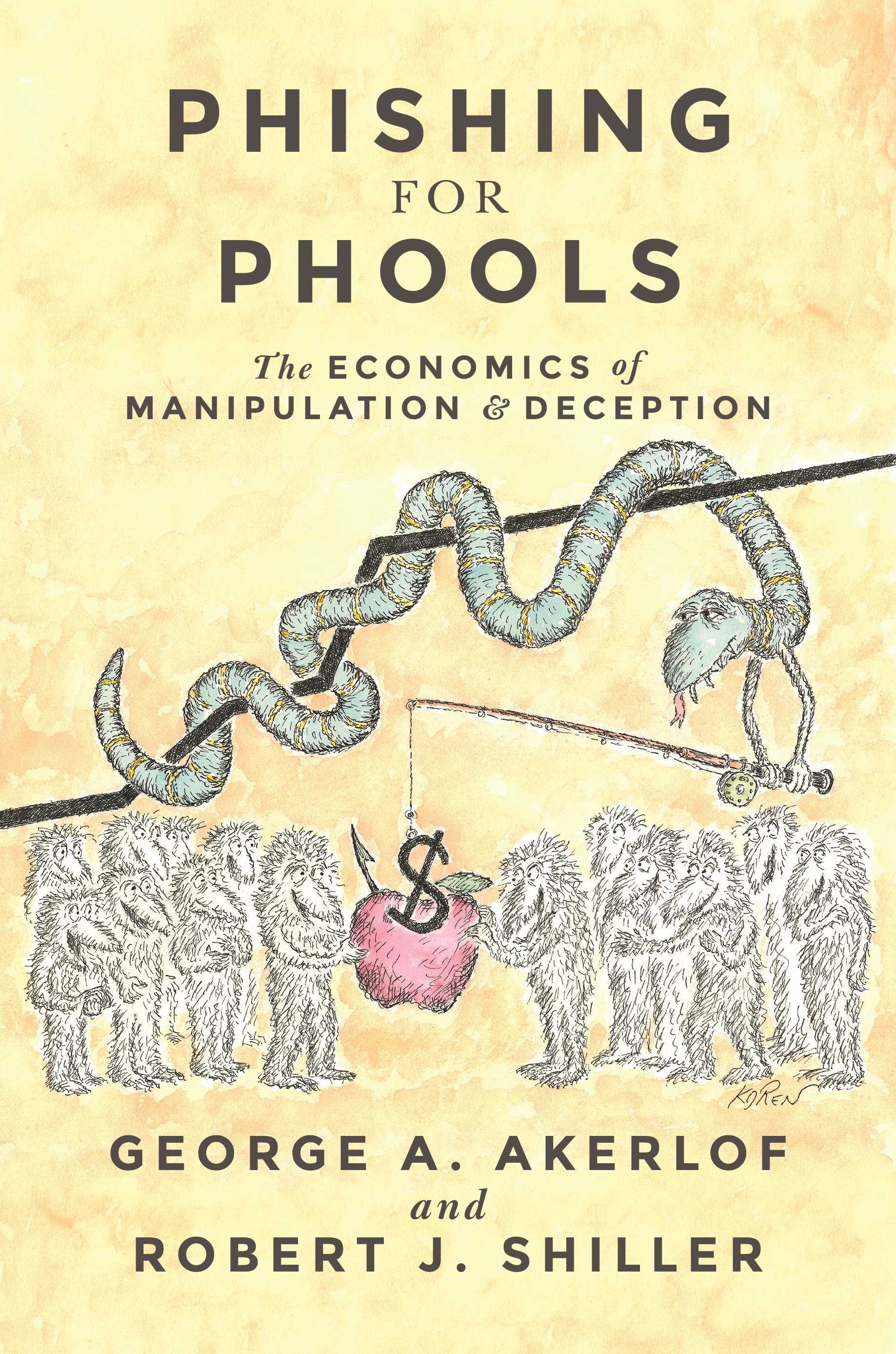
“Phishing for Phools” by George A. Akerlof and Robert J. Shiller [ https://press.princeton.edu/books/ebook/9781400873265/phishing-for-phools ] Americans (i.e. the European conquistadors and such) and the American “Way of Life” has always been very enthusiastically and fanatically religious. Today, the fever with which “marks” are willing to self-identify as suckers has reached epic proportions. “Subs” and “slaves” alike are even willing to pay to become the targets of so-called “targeted” marketing and advertising.
Suckers willingly stand in line to buy cigarettes, get tattoos, piercings and whatnot. Thereby, they willingly declare “please use me” — as if they were unworthy unless they can be suckered into becoming profit sources for big business … the obvious and completely transparent sucker seems to hang out a sign: “open for exploitation”.
[1] [ https://en.wikipedia.org/wiki/There%27s_a_sucker_born_every_minute ]
[2] i.e., the people who live, act, do business, etc. in the United States of America
[3] here I might also mention, the dictum “buyer beware, seller beware”, which curiously also calls attention to the integrity of “wares”; see also the rather exhaustive analysis “Phishing for Phools”
-
Free Speech & Market Speech
I have been mulling over one of my long-held beliefs a lot lately … and the big puzzle for me is: why do so few people get it?
I think the answer is a combination of several things — and that is a big part of why it seems to be complex, not simple, not straightforward, etc. Plus, there are also a bunch of sayings that are taken for granted … which seem to disprove my ideas without any rational thought and / or scientific analysis being involved. [1]
The opposition to my ideas is, I believe, on a very fundamental level little more than a “belief system” — perhaps on the level of: “anything which seems very simple cannot possibly be true”, or maybe: “everyone knows (see also my previous post, “Group Pride“) that the world is flat”.
I am today / now operating on a hunch — namely, that the words “free”, “market” and “speech” form a sort of triumvirate in which these words appear closely related, and through these relationships they kind of influence the interpretations people have of these words (which often appear in combination with one another). So for example, people quite often talk about things like “free speech” or “free market” … and then these two concepts also seem closely related to freedom. And then people will say that in a free country, people are generally free to express their (“free”) thoughts, ideas, etc. but then again no-one can force anyone to listen to them. [2]
In this vein, I have quite often wondered about how some companies actually purchase advertising space in order to freely express the company’s stance on some issues related to the business, perhaps business ethics or what have you. The part I wonder the most about is whether such companies are allowed to freely express such ideas, or whether the so-called “media channel” they wish to express themselves in (i.e. the medium’s management, editorial board or whatever) can veto their “right” to express themselves in this manner (my hunch is: yes … yet the medium’s “brand” may actually “take a hit” for not allowing such so-called “free expression”). [3]
A long time ago, I advised the management of a company that the word “shopping” (which is actually quite central to that company’s entire business model) is / was perhaps one of the “most valuable terms on the Internet”. This company acted upon my advice and the Harvard Business Review about the decision as an exemplary strong strategy. [4]
It is no secret that I believe domain names which are so-called “exact match” strings for single words are potentially very valuable marketplaces for the supply of and demand for corresponding kinds of information. [5]
Since these strings are so valuable as information and communication technology (i.e., as informative “media channels” devoid of branding implications), they are now quite commonly traded at “market prices” … which means that such strings are not “free”. Indeed: the expression “there’s no such thing as a free lunch” also applies to domain names (and in particular to domain names which are single words, especially if / when these words are potentially important marketplaces for exchanges in the supply of and demand for specific kinds of information).
Over the past couple decades, this has (quite gradually, in my humble opinion) become more and more clear to some “leaders” (mostly insightful “forward thinking” people who have listened to me and perhaps also managed to “grok” the ideas I have been expressing more or less freely).
One thing that still astonishes me, though, is how lethargic the general population seems to be in acquiring what I refer to as “literacy skills” — and by that I mean the very signicant difference in the quality of information that can be expected when visiting a domain name which is an exact match for a word (or “keyword”) in question versus entering that word as a “search term” after first visiting a brand name “search engine” (see also “This is a load of crap” [ https://podcasts.video.blog/2022/01/08/this-is-just-a-load-of-crap ] ). 😉

Google struggle: “This is just a load of crap” [ https://podcasts.video.blog/2022/01/08/this-is-just-a-load-of-crap ] The very slow march of progress when it comes to literacy may seem to be “behind the times”. We might be expected to have moved beyond such “backwards” technical conditions. Yet we ought to also recognize how profitable the business of manipulation (of mostly illiterate people) can be.
[1] Today, “science” is usually done using quantitative methods, and there is a quite obviuus dearth of “scientific method” for qualitative statistics.
[2] In the WordPress and “open source” communities, some people regularly explicitly distinguish between “free as in speech” versus “free as in beer”.
[3] This is also probably (and perhaps even acutely) the case for so-called “political advertising”.
[4] I will not disclose what they did, because I do not wish to make the king’s clothes completely transparent, so to speak. 😉
[5] There are, of course, many caveats to consider, and this is a sort of “consulting” I offer via http://confer.biz 😉
-
Group Pride
Elvis was sick. Marilyn was sick. Dorothy was sick. Adolf was very very sick. They all became heroes in their times. [1]
How reliable was the Oracle at Delphi? Did anyone maintain statistics about the reliability (and / or the validity) of this technology? Oh, wait a second — modern scientific methods had not been invented yet, right?
Billions of fans of Jesus Christ can’t be wrong, can they? The Crusades were neat, right and salutary, right?
Belonging to some group is an important part of being human beings — it may even be an important part of life in general (see also the homepage of http://Wants.Blog 😉 ). Yet is it not at least somewhat questionable if the reason for doing something, thinking something, believing something is nothing more than “because other people do that, think that, believe that …” (or whatever)?
This past week I set up an email account with an autoresponder for a support group I co-lead, and when I told the other leader about this “new and improved” technology (which automatically would reply with date, time & location of the next support-group meeting), my co-leader replied with doubt: “I don’t think that’s practical”. My co-leader prefers “using Whatsapp” … because everyone (besides a few, like me 😉 ) uses Whatsapp (I actually say that people don’t really use Whatsapp as much as Whatsapp uses them — LOL).
Whether it’s Whatsapp or Google or Tiktok or whatever, these strings are meaningless: they tell you nothing. They will sell you down the river at the drop of a hat (as long as they can make quick buck while doing so — see also “The Social Construction of Publishing“). This is not “by the way“… — no: selling you down the river is their entire business model.
Perhaps there is a sort of queer secondary pride, which users (aka addicts) of these brands get off on. Here is my speculative thought: Could it be that people feel worthless, and therefore they are not only willing but even happy to be successfully sold down the river? It seems like a sort of validation of their own worth to be categorized as something (i.e. put into some more-or-less arbitrary “marketing category” [2]) rather than being simply nothing.
[1] Elvis Presley, Marilyn Monroe, Dorothy (aka Judy Garland) and Adolf Hiltler
[2] in case you are somewhat clueless about what such “marketing categories” refer to, they are “prejudices” like “male”, “female”, “young”, “old”, “sick”, “left”, “right” and so on (including, “of course“, things like “race”) — advertisers are very discriminating (pun intended)
-
Disrespect is Depressing
I actually had this thought first of all in German: “Verachtung ist depremierend” — and the nuances of “respect” are actually somewhat different from those of “Verachtung”. Kluge’s etymological dictionary informs me that the “ver-” in “Verachtung” means the opposite (rather than the negation), and “Achtung” also does not focus (haha, pun intended 😉 ) on the superficial appearance or visage (the way “respect”, or analagously “aspect” do). So “Verachtung” is not really merely lacking “Achtung” (in the sense of ignorance), it is an active practice of looking past (rather then overlooking) the devalued, the more lowly than common, the dirty, downtrodden, the scrapings from the soles of shoes. Being considered this way is downright depressing for any soul, for any kind of person experiencing such negatively charged prejudice.
This phenomenon is nothing to sneeze at.
Oddly enough, that very last sentence is what I want to focus on most of all (here and now). I may come back to the previous paragraph at some later date to investigate whether and to what degree the depressing effect of disrepect is at least partially to blame on a narcissistic attitude of deserving respect (maybe “undue” respect?) in the first place, but today I want to primarily consider where “sneezing” (and “sneezing at something”) comes from — not the concept, but rather the natural phenomenon.
This is the heart of the issue: is sneezing a natural phenomenon or a learned behavior? It obviously negatively effects the environment, and thereby I guess it could be considered “*not sustainable*” (beyond being merely disrespectful). If sneezing is in fact a force of nature, then why would nature design itself to be sort of self-destructive this way? I think that normally we consider “natural” to mean *healthy*, *growth*-oriented, *living*, *life-sustaining, … yet is nature itself in fact “non-sustainable*”?
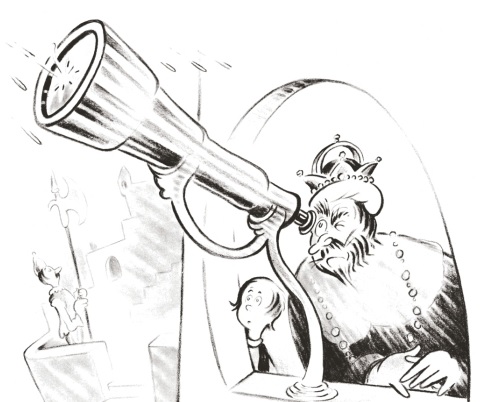
Detail from “Bartholemew and the Oobleck” by Dr. Seuss (1949) https://www.rhcbooks.com/books/42959/bartholomew-and-the-oobleck I don’t know. I am curious, but also completely clueless. What about you?
-
Learning How to Code
You may recall that in my previous installment [ https://socio.business.blog/2023/04/09/reboot-2-0-are-we-ready-for-a-renaissance-in-open-source-information-technology ], I mentioned that one of the first “codes” to be made open source were Latin texts. Latin, however, was not one of the first codes to exist.

Inscription of Xerxes the Great near the Van Fortress, written in Old Persian, Elamite and Babylonian [ https://en.wikipedia.org/wiki/Xerxes_I_inscription_at_Van ] The text / texts above is / are encoded using Cuneiform, which is generally considered to be one of the earliest examples of written language.
A (written) language which is widely used is perhaps one of the most significant examples of open-source code. Languages evolve “out there” in nature. They are not owned by anyone in particular.
This phenomenon (of wide usage) is also quite similar to the statement often referred to as “Linus’s Law”: “given enough eyeballs, all bugs are shallow” (cf. e.g. https://en.wikipedia.org/wiki/Linus’s_law). Likewise, websites like wikipedia.org , google.com , etc. are quite often used in ways previous generations might have turned to “The Bible” (“Bible” is a Latin term referring to “books”, so “The Bible” is more or less equivalent to “the books”).
Note how important the role of literacy is in all of this. A person who is not aware of the biases introduced by languages and / or information resources is severely lacking capabilites required to be an informed citizen. This is one of the main reasons I launched “Standard Queries & Utilities” [ http://squ.data.blog ] a while back … so people could exchange information much in the same way that Enlightenment scientists exchanged information about the natural sciences centuries ago.
Let me present you with a rather simple example. Have you ever heard the expression “it’s like night and day”? What do these two words actually refer to? Of course in the metaphorical sense they do not refer to the natural phenomena referred to as “night” and “day”. Yet even these natural phenomena seem rather unclear. They do not merely describe different times, because if it is “night” on some parts of the globe, it is also “day” on other parts of the globe. What about dawn and dusk? Are those neither night nor day? And what about the land of the midnight sun (i.e., the Arctic Circle)? What do the terms “night” and “day” refer to here? The answer seems to be: “it’s complicated“. 😐
Hence, terms which seem very simple and straightforward can turn out to be quite complex. This certainly does not bode well for simplistic algorithms used for many different kinds of so-called “artificial intelligence” (such as machine translation or even automatic information retrieval). Another example: racial profiling is not simply a “black” or “white” issue.
-
Reboot 2.0 — Are We Ready for a Renaissance in Open Source Information Technology?
In my opinion, the time is ripe for a reboot in open source information technology — yet exactly what that term “open source information technology” is supposed to mean might first need some clarification.
There are quite a few possible misinterpretaions (“mis-” as in: “in disagreement with me” 😉 ). My point of view is rather broad-stroked, yet I can also imagine that some might take a more short-sighted point of view … and I can also imagine that even I might be easily misled to adopt such a short-sighted perspective.
The reason why I (or almost anyone, I guess) could be so easily misled is because our own life / lives seems so meaningful and significant. In reality, one out of eight billion is only 0.0000000125%.
Most people of my age — at least: in my “world” — remember the dot-com crash. Those were sort-of crazy times, and many people probably view the recovery as hard, but kind of healthy in a “whatever doesn’t kill you makes you stronger” kind of way.
Yet although the dot-com crash is more than two decades old, I consider this time span to be rather short-sighted. Another question might be: when was the first coming of open source information technology, because without such a first coming, how could anyone really speak of a renaissance?
This is where I hope to expand most people’s perspective on the notion of “open source information technology”. In my opinion, the first breakthrough of open source information technology was precipitated by the invention of the Gutenberg printing press in the 15th Century — it was (perhaps?) not the printing press itself, but the wide availability of ideas that resulted in the following decades and centuries.

“A traveller puts his head under the edge of the firmament in the original (1888) printing of the Flammarion wood engraving.” Source: https://en.wikipedia.org/wiki/Flammarion_engraving No one remembers this. We cannot remember this, because no one alive today was alive five centuries ago. Half a millennium ago, the source code locked up in monestaries and castles was written in Latin. People would fight many battles and pay with their own lives over this source code. There was much death, destruction and fighting involved — and almost no literacy at all.
The first true blossoming of open source information technology were works by people like first of all Martin Luther, and later Copernicus, Galileo and much later Isaac Newton. Ironically, although Da Vinci’s works are widely available today, in his day he kept them very closed off, guarding them with utmost care as proprietary trade secrets.
It was the wide availability of these scientific works which would become central to the scientific method. Enlightenment scientists shared information, published information, and later generations would ultimately build the public schools and libraries that Martin Luther had so strongly campaigned for centuries earlier.
By the 19th Century, open source information technology had become the motor of progress that paved the way for the immense technological progress that continues to this day.
Now let’s return to the dot-com bubble. Those of us who are old enough to remember the revolutionary spirit and fervor that permeated the early World-Wide Web may also remember that there was a quite formidable establishment which was very much not interested in any kind of revolution. It was most of all these establishment forces which pulled the emergency brakes. These establishment forces precipitated the dot-com crash, and these establishment forces installed a quasi “new and improved” system which came to be known as “Web 2.0”.
Yet Web 2.0 neither was nor is open source information technology. Please stay tuned to this channel to find out more about what is! 😀
-
A jumping off point for the truth
I listen to quite a few podcasts, and I have already mentioned some of them here before. Now I am going to mention an episode of “Factory Settings” (another episode of which I also mentioned a few months ago — see “There (but for the Grace of God) Go I“).
In this new (or at least more recent) episode, Bridget Phetasy asks two questions (actually she doesn’t actually ask them herself, but her husband asks them for her):
Did you ever trust the media? If you lost their trust, is there something they could do to regain your trust? [01:13]
What follows these questions is more than half an hour of questioning “the media” (which over the course of the discussion itself also becomes somewhat of a moving target), and at the end the conclusion is (more or less): anyone who trusts the media must be somewhat crazy.
For example, Bridget and Jeren pretty much completely agree that the self-portrayal of the media is as follows:
These cable news channels (in order to exist and define themselves) have to be defining themselves as the truth
[11:32]… which both also seem to agree is completely ridiculous.
Yet then, finally, Jeren brings a quote (which the title of this post refers to), leading him and Bridget to list (and review) a few trusted sources. Thus, without skipping a beat, the two end the podcast by basically contradicting everything they had said beforehand. It is nothing short of absolute absurdity.
Yet I now wish to answer Bridget’s questions — which I knew “100 percent” as soon as I heard them (at the outset):
- I trust rational media
- I distrust irrational media
If you still don’t know about the difference between rational media and irrational media, you might want to check out “Introduction to Rational Media: Content vs. Container” [ https://contextual.news.blog/2020/04/22/introduction-to-rational-media-content-vs-container ] (which I consider to be an excellent “jumping off point for the truth” 😉 ).
-
Routing Around Regulatory Bodies
Apparently, several centuries ago, William Shakespeare invented some new words. [1] Of course these words are less new now … some of them might even be considered rather ordinary or regular (or whatever). In contrast to Ludwig Wittgenstein’s supposition about how languages seem to limit what humans are capable of expressing, good ole Bill simply expanded the language to suit his needs — he simply routed around, not paying attention to any limits any governing body might feign to enforce.
Natural language is more or less obviously a natural phenomenon. That might sound simple and straightforward, but it does get a little tricky when someone attempts to nail down exactly what ought to be considered “natural language” (or not). I will leave this definition problem as an exercise for ambitious readers.
What people use to communicate with each other is probably one of the most fundamentally anarchic choices made by so-called users of information technology. The fundamental freedoms of open source technologies are very much analogous to the freedom of choices made by users of natural language (including not only William Shakespeare but also ordinary folks like you or me). [2]
We are all free to route around anything — be that a government, a mainstream media channel, fossil fuels, a military industrial complex, … or whatever.

Image Source: https://www.widewalls.ch/magazine/vijya-kern-photos-samo-graffiti I have a hunch that some people with establishment positions (here’s looking at you, kids 😉 [3] ) may very well feel that such extreme notions of freedom (and anarchy) might be dangerous … to someone, or something, or some way of life, … or whatever.
[1] see also “In What We Trust” [ http://remediary.com/2021/02/11/in-what-we-trust ]
[2] see also “Propaganda Information Technology vs. Indigena Information Technology — the Basic Idea” [ https://indigenous.news.blog/2022/05/07/propaganda-information-technology-vs-indigena-information-technology-the-basic-idea ]
[3] my readers — whether ambitious or not — may also be interested to note that “StackExchange” has a note concerning this phrase @ ” “Here’s looking at you, kid” meaning? ” [ https://english.stackexchange.com/questions/223900/heres-looking-at-you-kid-meaning ]
-
Proprietary Contexts vs. Free Market Contexts

This is a topic which I have yet to see adequately addressed, at least to some degree (perhaps) simply because we cannot address it … insofar as there is no appropriate language for it, there is no appropriate vocabulary.
Quite a few years ago, I wrote (vaguely) about this on my personal blog (see “Auctions + Markets for Domains, Domain Names + TLDs” [ http://remediary.com/2016/07/26/auctions-markets-for-domains-domain-names-tlds ] ). At the time, the so-called “New Generic Top Level Domains” were just beginning to be rolled out, which most of the knowledgeable and careful folks in the domain name industry viewed with skepticism. Quite often people would warn about the balkanization of the Internet, and the lacking literacy skills of most people who use the Internet on a daily basis.
One might view “proprietary” as simply “closed”, and “free market” as simply “open” — but that would be an oversimplification. Organizations, information, etc. are rarely (if ever) such extreme instances — the vast majority (if not all) cases are on a sliding scale in between these diametrically opposite extremes.
Consider (for example) the situation with companies — which are often either referred to as “private” or “public”. Usually, companies are somewhere in between — either they are “closely held” or in “wide distribution”. Let alone the very complicated matter of gauging what it means for a “private” company to be regulated by “government regulations“.
All of that said, about a decade ago a large part of the Internet was auctioned off to a very large number of very large corporations. ICANN essentially handed over the keys to innumerable castles to sole proprietors of innumerable fiefdoms (the process is — as far as I know — actually still presently “rolling out“). Most people are completely oblivious to the fact that each of these so-called “New Generic” top level domains belongs to only one corporation (which is why I refer to them as proprietary domains), and that that corporation can do whatever they please with that top level domain. This should conjure up images of kings sitting on thrones, something which is usually only known in fairy tales or from ancient history. This is ABSOLUTELY NOT what democracy looks like.
How did this happen? If you are surprised that some government body might have mismanaged something, then you are excused from this conversation.
-
The Contexts of Algorithms
IT’s an unsolvable problem: there is not some magical equilibrium in the middle that will make this work. IT’s about finding a balance.
“There is No Algorithm for Truth – with Tom Scott” [18:00 – 18:15] (see also https://www.tomscott.com )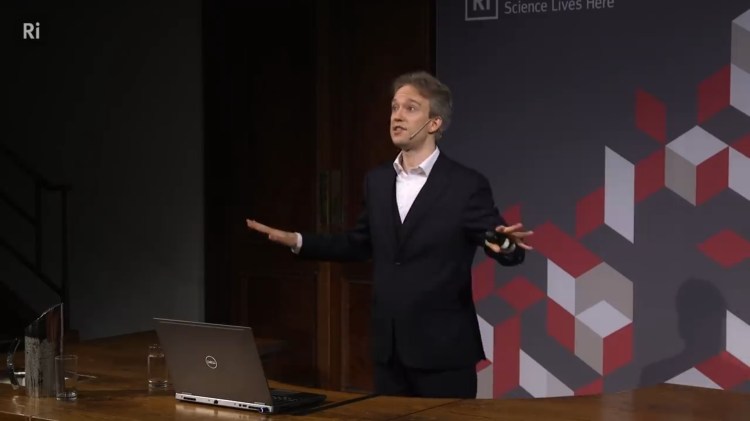
“IT’s an unsolvable problem: there is not some magical equilibrium in the middle that will make this work. IT’s about finding a balance.” (from the video “There is No Algorithm for Truth – with Tom Scott” [18:00 – 18:15] ) I am fairly certain that the person giving the presentation in the video has a website @ https://www.tomscott.com That quote comes from a presentation (apparently given in September 2019) — and the “IT” being referred to is (more or less): THE Algorithm” … specifically (here, in the quoted instance) the YouTube algorithm … which was being discussed a lot at that time.
So what has happened in the meantime? (LOL 😉 ) SURPRIZE!!! We are now talking about other topics.
Except: We’re not.
Today I want to address what has NOT changed.
IT’s context. Well over a decade ago, I made a little funny — I said: “If content is king, then context is queen — and she wears the pants!” Today, that funny statement might be taken a little off-color, much like me maintaining that my pronoun is “Boss“. 😛 But it’s not so concrete, it’s simply a metaphor for what goes on in (most) people’s brains, leading to (most) people’s behaviors.
The algorithms for YouTube and TikTok differ. The Google algorithm is also different. The Amazon algorithm is also different, too. If there were only one algorithm, we might still all be asking the Oracle at Delphi for answers. We don’t, because sometimes we want a hotel, sometimes we want a car, or a song, or a story, or a movie, or a restaurant, or a delivery service, … and ultimately we will always want something completely different.
Context matters — and not a little, but a lot. If I ask for X, then Y and / or Z are out of the question.
If we all were still consulting the Oracle at Delphi, we would probably be lost. If we all continue to spend more time on YouTube or TikTok or Wikipedia or whatever (one fixed source of information) then we will all probably continue to get lost.
In order for lost people to get found, I long ago came up with some ideas. One good place to find a start (in order to ultimately find a better [or even the best] ) answer is “Introduction to Rational Media: Content vs. Container” [ https://contextual.news.blog/2020/04/22/introduction-to-rational-media-content-vs-container ].

Social Business (WordPress weblog)


 Socio Business blog