-
Irrational Media’s Business Model is Propaganda
I am amazed that I apparently need to say this. I feel it ought to be as plain as saying “day-time is when it is not night-time”.
I was chatting yesterday with a friend and I asked him what he thought of my approach — namely of the way I do not pay attention to irrational media. [1] He was somewhat dumbfounded, and I find that surprising … insofar as I have been explaining these ideas to him for at least a decade already. In recent years I have underscored the way he chooses to ignore my ideas (insofar as he continues to pay attention to irrational media instead of rational media).
The discussion yesterday was also following upon a previous discussion from the previous afternoon, in which I drew attention to a famous quote from Krishnamurti (?):
It Is No Measure of Health To Be Well-Adjusted to a Profoundly Sick Society
“It Is No Measure of Health To Be Well Adjusted to a Profoundly Sick Society” [ https://kfoundation.org/it-is-no-measure-of-health-to-be-well-adjusted-to-a-profoundly-sick-society ]Nonetheless, I feel the heavy weight of mainstreaming forces imposed on individuals via the “Human Brain Conditioner” makes it very difficult for many people to discover their own ability (see also “Inter-Reliance, Self-Dependence & Responsibility“) to resist the propaganda (and to discover indigena technology such as rational media). [2]

Source: Are We Really Living in 1984? Truth, Eyes, and My Favorite Quotes from 1984 by George Orwell. [1] See “Rational Media” [ https://phlat.design.blog/2024/01/14/rational-media ] I don’t think I provoked him by using this terminology. Instead, the discussion came about because he mentioned some news story from an irrational media source — and he was upset because he felt many people are being duped (see also “There’s a Sucker Born Every Minute” and / or “The Social Construction of Publishing“).
[2] See also “Propaganda Information Technology vs. Indigena Information Technology — the Basic Idea” [ https://indigenous.news.blog/2022/05/07/propaganda-information-technology-vs-indigena-information-technology-the-basic-idea ]
-
Wholely Holy Holey
I am writing this post sort of “off the cuff” while still traveling.
I thought of the title while I was attending an event. But sometimes I will convince myself that a title is crystal clear only to discover a day or two later that is actually quite cryptic. Case in point.
But no worry — I am going to improvise and act as if I knew what it meant once, or now, or never, or whatever (or — well maybe you get my drift?).
So much of humanity is quite obviously dropping the ball. It’s a little scary, when you think the kinds of technologies that humans seem to have become masters of.
Although many people at the event I was attending seem at least “adequate” with respect to something like technical literacy, it soon becomes obvious that they cannot get past “square one” when it comes to organizing information that enables supply to meet demand and thereby produce adequate results.
At one sponsor table a young woman named Niki (I think, I can’t remember the exact spelling of her first name) saw my phone and laughed, saying “how do you take a photo?” — so I took one of her. Then I showed it to her and she wanted to make a photo of my photo for the “gram”. I’m sure MZ is happy about that … (?).
So I challenged her to share it such that I might also be able to see it (i.e. beyond all the robot secret service agents across the world who would archive it like hell and / or also the spyware companies who might not be able to turn it into dollars and cents, but maybe into some micropayments? or nano-vibes?)

The face that launched a million bots This was not the exception. I spent 3 days listening to noobs tell me stuff they apparently “knew”.
Their convictions seem strong enough — but their foundations are sandy at best, cloudy at second-best and in my humble opinion too shaky in any case. Maybe they’re telling me stuff they learned from a video hosted via one of the world’s leading advertising agencies (I could imagine the noobs might even find it hard to figure out what I’m referring to).
They don’t find it at all questionable to maintain supposedly strong convictions based on being convinced by advertisements. In contrast: advertising models are simply “modern“, stylish, en vogue, crap like that.
I guess this OG should consider himself lucky that he wasn’t accused of being a “boomer”.
-
Sixth Meditation on Social Media: Fair Use & Advertising
I’d like to bring this series full circle, right back to the beginning — I didn’t start the Fair, the Real Truth is a Trade Secret.

Source: Engagement with Our Industries [ www.stationers.org/company/engagement-with-our-industries ] Apparently, according to Desmond Morris (who passed away just a short while ago, RIP), humans have been using the technology of the handshake for many centuries or even millennia. Perhaps only the kiss is more primal? Yet in the field of communications, humans have also evolved some rather fundamental institutions to deal with such “social media” things. [1]
For most of human history, the vast majority of humans have been largely illiterate. Gutenberg’s printing press didn’t really change that very much — in any case: not overnight. Even hundreds of years later, when literacy was widely considered to be a requirement during the birthing of the United States of America, being literate was pretty much on the same level as being elite.
What Gutenberg obviously did manage to do was to shock the establishment into making rules for how all of this newfound freedom of expression ought to be dealt with — which basically boiled down to: censorship. Censorship was not invented as a result of the printing press, but it was expanded in order to meet the birth and growth of new industries, which are now commonly referred to as “media”.
Over the past few centuries, advances in media technology have been significant, and therefore also required a number of amendments in the legal and institutional systems governing the so-called media landscape. One particularly “tried and true” principle (beyond the basic idea of copyright itself) is the notion of “Fair Use” and the quite similar “Right to Quote”. Very early on, people almost immediately recognized that if and when someone (anyone) says something (or writes something), it must be considered “fair” to quote what they say (or write). Indeed: A civilization which bans quotation seems hardly civilized.
A few days ago, I followed a link in one of my recent posts which links back to an earlier post. To my surprise the following image appeared on the page:

Source: “What’s X?“ What I find particularly odd about this image is that I believe everything in the image is 100% fake — I am convinced that it contains no truth or reality whatsoever.
Here is a screenshot, showing the image in the context within which it appeared on my screen:
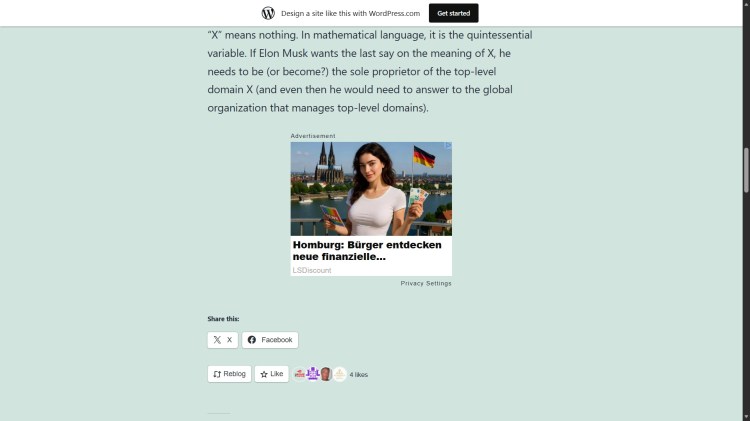
Source: “What’s X?“ I did not click what appeared to be a “text link”, and I therefore do not know what any of the text is supposed to refer to.
I am not shocked by the appearance of this image @ socio.business.blog — after all, WordPress allows me to use this site “for free” (but actually: ) in exchange for such advertisements.
What I consider shocking is that we still seem to have not developed a way to refer to such advertising, to quote it, say things about it, etc.
[1] Again, I wish to remind my readers — as it can’t be reiterated enough times: “social media” remains a completely undefined phenomenon. See also “First Meditation on Social Media: Let’s Get Social“
-
Fifth Meditation on Social Media: The Future of Social Media Technology
Yesterday, a friend asked me who I view as my role model. My immediate response (in the context of that discussion) was Wittgenstein. Now that I reflect on it with a little more distance, I would perhaps name Benjamin Franklin, who wrote in his autobiography that he aimed to imitate Jesus and Socrates. There are indeed an ample supply of old white dudes who seem to fit the bill quite nicely. E.F. Schumacher, for example, or maybe someone like Jean Baptist Say (though I actually know very little about his skin color or other visual characteristics). Generally, I really couldn’t care less about the dozens, hundreds or thousands (or millions or more?) of people who have influenced my thinking. I prefer to focus simply on clearly expressing my own ideas — and that can already be quite a challenge, as “it’s complicated” seems to be the most appropriate answer to almost any question.
Today, I would like to (re-) consider Mr. Say’s Law (which is, simply stated, little more than an expression):
Supply creates its own demand.
See “Supply, Demand, Natural Language & Free Markets — Some Preliminary Thoughts & Ideas“Over the past few decades, the supply of written texts has been vastly expanded. Today’s economists would normally refer to a “shift” in supply. Accordingly, the equilibrium price of writing has plummeted. As I myself wrote in “Supply, Demand Natural Language“, supply and demand actually use different types of scales: supply is expressed in linguistic terminology and demand is expressed in numeric terminology (granted, this way of expressing Norbert’s Law [for want of better terminology] is quite sloppy — but so was Mr. Say’s expression).
Indeed, I do not mean to say that I feel differently than Mr. Say apparently did (in his “Say’s Law”). I wish to mash up both laws. And this is indeed not at all difficult.
Imagine you want to a book store and told the clerk that you wish to buy $100 of literature. Um, … I certainly hope this sounds as ridiculous to you as it does to me. The clerk could simply present you with any book for $100 or any random sample of 10 books priced $10 each, or innumerable variations on that entirely random theme. Totally absurd!
Indeed, in this situation: money is of little help.
Instead, I see in this scenario an early indicator of something which I have been predicting for several decades already — namely: (“In the long run,”) Language will replace (other forms of) money.

Source: https://indigenous.news.blog/2023/09/17/some-reflections-on-the-evolution-in-propaganda-indigena Since the volume of texts (including, by the way, any / all recorded information) has become so enormous, I believe the time has come to develop new and improved tools for text selection. [1]
People who continue to stick their heads in the sand and ignore the value of natural language as an information technology are doomed to be drowned by wild ranging torrents of ASS (“Artificially Sentient Slop”) flooding into subterranean spaces. The comfortably numb will soon die off, as the rising floods of ASS will teach the rest of us another lesson from Darwin’s Law.
[1] Vennevar Bush, “As We May Think” (see e.g. en.wikipedia.org/wiki/As_We_May_Think ). Let me simply add that today, all recorded information is indexed by text
-
Fourth Meditation on Social Media: Natural Evolution is Better than any ASS Model Insofar as it Doesn’t Collapse
Nature is nice. Even when dinosaurs go extinct, it nonetheless makes humans who are able to write stories about them.
There are long traditions of comparing theories of natural evolution with those of so-called fundamental laws of economics. A while back, for example, I wrote an entire post about ideas spread by Pareto (see “More or Less is Better“). Even Adam Smith’s vision of an “invisible hand” is wonderful in a way that seems to almost send signals to Charles Darwin — and perhaps similarly Karl Marx’s Communist Manifesto also is sort of a premonition of the later instantiations known as “social Darwinism”.
Yet we should not be misled to believe that simply since someone might have discovered such similarities, that humanity (and the ASS systems which have become a cancerous outgrowth upon humanity) has resolved all issues (such that there might no longer exist any unresolved questions throughout the universe). In my humble opinion: Nothing could be further from the truth.
As it is, the wonders of life have just today bestowed to me another example of such a phenomenon of fallacious reasoning:
Attention equals money — that this is a literal attention economy. People — it would be silly to think that these things don’t matter, because — if it is your industry — obviously if you don’t get any attention, you won’t be in business.
https://podcasts.video.blog/2026/05/17/if-you-dont-get-any-attention-you-wont-be-in-business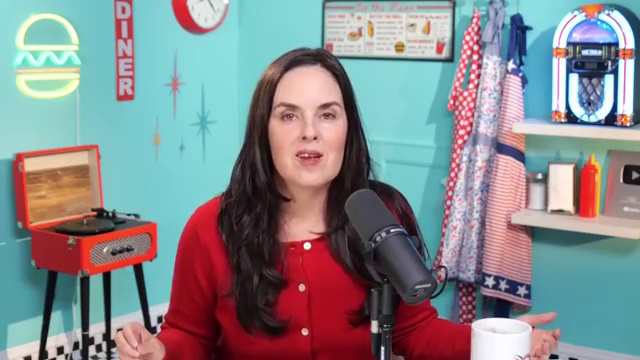
Bridget Phetasy: “business” [ https://podcasts.video.blog/2026/05/17/if-you-dont-get-any-attention-you-wont-be-in-business ] Today, many (if not most) people seem to adhere to a rather narrow-minded interpretation of the “business” concept. In my own broad-minded interpretation, business refers to the state of being busy. It doesn’t mean money or dollars or gold or bitcoins. Indeed, perhaps in “broadest“-minded terms, even “rest” is a state of activity. I could busy myself with incessant meditation. In these terms, business is not even an option. It is more of a mindset.
Personally, I prefer to direct my attention to rational media. [1] There are many reasons behind this decision, yet I do not feel the slightest urge or need to justify them. I view this as my own preferences which I feel are rational much in the same way, I guess, that it feels rational (and also natural) for me to sleep during the darkness of nighttime rather than during the bright hours of daytime.
In the camp opposite my own camp — in other words, among those who prefer irrational media to rational media — there seems to be a bias against “context dependency”. People who prefer irrational media usually say things like: “the names of things don’t matter” or “don’t judge a book by it’s cover” (and thereby imply that the titles of things are immaterial — see also “What’s X?“). Indeed, this is fundamental to the “Google” approach, insofar as the Google mythology dictates that it is necessary to scour every last corner of the Internet in order to obtain the so-called best results. Shockingly, this mythology has hardly any explanation whatsoever for the very astounding fact that a huge proportion of “top results” happen to be extremely laden with advertisements that primarily fill the Google organization’s coffers (which seem to be overflowing so rapidly that they not only reach to the moon but continue to overflow and overflow and spread Earthly resources far and wide out into space — even past the final frontier, all the way across the universe).
[1] See “Rational Media” [ https://phlat.design.blog/2024/01/14/rational-media ]
-
Third Meditation on Social Media: Segregation , Segmentation & Differing
You may recall that last week we broached the topics “social exclusion” and “social inclusion”. This week I wish to broaden our scope to consider something I’ll call “social diffusion” — and also even broader than that: the entropy of the universe.

Source “Losing the Plot“ Before you object and accuse me of having “lost the plot”, I want reassure you that my very tangential and novice treatment of this very modern and scientifically advanced topic will be extremely brief, superficial, will hardly scratch the surface and most of all: will not hurt (at least not extremely much).
It was not until 1865 that Clausius invented the word entropy as a suitable name for what he had been calling “the transformational content of the body.” The new word made it possible to state the second law in the brief but portentous form: “The entropy of the universe tends toward a maximum,” but Clausius did not view entropy as the basic concept for understanding that law. He preferred to express the physical meaning of the second law in terms of the concept of disgregation, another word that he coined, a concept that never became part of the accepted structure of thermodynamics. [Martin J. Klein, “The Scientific Style of Josiah Willard Gibbs,” in “A Century of Mathematics in America,” 1989]
Search ‘entropy’ on etymonline [ www.etymonline.com/search?q=entropy ]I wish to completely sidestep the past century (or more) of advanced mathematical conceptualizations and instead go immediately to my own “gut-feeling” interpretation of entropy as “the degree of order / disorder that exists” … or even more simply: how “mixed-up” something is. If (as we addressed last week) we wish to include or exclude particular individuals from our social “in-group” vs. “out-group” systems, we would need to till our garden and thereby create order (instead of allowing anything / everything to simply diffuse throughout the ether more / less randomly). Likewise, my hunch is that the vast majority of humans believe that there is indeed some sort of “good” order which is supposedly preferable to some sort of “evil” disorder. Chaos is normally interpreted as the opposite of any goals we aim to reach for (such as plucking an apple from a tree).
Now let me make a quantum leap to the fundamental theoretical thinking about the World-Wide Web. The basic idea is that of a distributed system — ideally, the web is completely decentralized. Just as the “real world” in which I live still seems to be reasonably ordered despite some so-called “laws of nature” maintaining the world is always and everywhere and forever becoming more disordered, so too the World-Wide Web also still seems to have a rather long way to go before anyone could reasonably begin to make a case that it might be even just a little bit decentralized, distributed, whatever. [1]
I feel that starting from these two insights we ought to now consider the historical evolution of our conceptual thinking. Let me just go out on a limb and simply state that “it all started with segregation” (e.g. in the first verses many ancient religious texts, there is some mention of “in the beginning, there was” and then a short list of how things were in a simple and straightforward manner). Since the unraveling of history made things more and more complicated, the world we have now is somewhat more complex. Or at least the world before the scientific revolution cleared it all up, right?
And yet, even though we now luckily have science, that’s not where this story ends.
The new and improved chapter of life is all about segmentation. Everybody wins, because for every purpose under heaven there is a widget. [2]
Yet personally I beg to differ. I don’t need no “slicing and dicing”, thank you very much. I don’t need no very fine print. No dark sarcasm in your trademarks. [3] Your ASS can go SPAM itself. [4]
[1] “Introduction” [ https://phlat.design.blog/2024/01/14/introduction ]
[2] “There’s a Sucker Born Every Minute“
[3] “Rational Media” [ https://phlat.design.blog/2024/01/14/rational-media ]
[4] “ASS: Artificially Sentient Slop“
-
Second Meditation on Social Media [GMTA:] Great Minds Think Alike 🙂
I dedicate this post to a woman named Laura, a quite obviously knowledgeable person I “discovered” a few weeks ago (I guess she is what is “also known as” a “virtual” acquaintance — occupying a space somewhere in between “cyberspace” and “in real life”).
She disclosed to me that I sound sort of “bot-y” to her, so I have included a bot smile :] and also a somewhat more human smile, too, in the title of this post.
Source: https://www.phrases.org.uk/meanings/get-down-to-brass-tacks.html Yet to get down to brass tacks, I was already planning to write how no algorithm has really done a good job of solving the WWW-SPAM issue, and there Laura comes along and says “R U a BOT ?!?” (LOL)
I do admit that one idea which seems to be rather easily conveyed when using the term “social media” is this notion of “real people” (vs. let’s just mention the notion of “fake news”). There has been much philosophical energy expended on such ideas (see also my own adventures into this space right here on this blog: “Building on Dunbar” 😉 ) … and so it almost seems like we could all begin to talk about “theories” or junk like that … yet to make a long story short being familiar with something also feels familiar somehow … making us more inclined to nod our heads in agreement. Yes?
OK, can I get you on board with the idea that I am NOT a bot? Yes?
Are you beginning to become accustomed agreeing with me? Yes?
Would you like to sign this contract now? No? Why not?
Because you don’t trust some random person writing stuff onto a webpage in his FREE time? Free sounds dirty (as in: dirt cheap), doesn’t it?
Well, OK — I will now abrubtly ABANDON that train of thought before we all get derailed.
What I actually wanted to point out today is that if we were well acquainted, then we might actually think similarly about many things. We would, for example, presumably speak the same language (or at least very similar languages — as Kings and politicians are often also quite quick to point out). We would be and feel familiar with all sorts of stuff. It could really become quite cozy. And all of that would make it much more enjoyable and a far more effective way to annihilate stuff like SPAM and ASS [1] and stuff almost everyone agrees is ugly, vile, pernicious, obsessed and deranged … — but I digress.
[1] See “ASS: Artificially Sentient Slop“
-
First Meditation on Social Media: Let’s Get Social
“Social Media” is a term for which there is no consensus regarding its definition. Last week, while writing “Push + Pull” [ https://fuckwith.news.blog/2026/04/22/push-pull ], I also (sort of haphazardly) discovered a blog / website at heidicohen.com which appears to be defunct now. That site includes a post in which many who seem to claim to be something like “social media experts” were asked to offer a definition of the term. Most of these experts failed miserably — the vast majority did not even muster scratching together something which could even qualify as a definition, but a very small few actually managed to at least make some amusing statements. For example, Heidi Cohen herself contributed this very well crafted morsel:
Social Media are the platforms that enable the interactive web. They do so by engaging users to participate in, comment on and create content as means of communicating with their social graph, other users and the public.
https://heidicohen.com/social-media-definitionI would say that she deserves brownie points for being grammatically correct that the word “media” seems to denote a plural phenomenon.

Mary Mccoy “Let’s Get Social” Since this is (hopefully) the beginning of a series of meditations, I think it’s entirely appropriate to get back to “Square #1”. So let’s try to clue the “newbies” (let’s say anyone born since the turn of the millennium) how “social media” came about.
At the turn of the millennium, the “Web” world was sort of in disarray. Search had not been “solved”, but even more important to the traditional publishing industry was the fact that their entire business model looked very much doomed to collapse because of what was “going on” (and I was very prone to quoting Marvin Gaye back then 😉 ).
Then the “dotcom crash” happened (I actually prefer to call it the “dot crash”, as I still see the “dotcom crash” looming in the future). After all of the rubble was rubbed away, the Google Guys got up on stage and declared that they had solved search. Perhaps there were also a few backroom deals going on, and then what emerged was an IPO with much fanfare … and ultimately Google owning the entire online advertising industry (if you’re a newb, you might want to try “looking up” something that used to be called “DoubleClick”). Another hiccup that happened at that time was that Google devised a new algorithm that satisfied Wall Street, Madison Ave and almost every other location from the Redwood Forest to the New York Island (and perhaps even beyond … ). In case you newbs want some extra credit: try looking up the “nofollow” tag … which essentially invalidated a very large part to WWW communications and simply declared this information to be worthless.
This was of course hunky-dory for the very short-sighted publishing industry. Little did they know that they would soon be working for table scraps and would otherwise also become entirely superfluous.
Pretty much the only thing that has changed since then is this phenomenon many people refer to as “social media”, yet which no one seems able to provide a definition for. Ironically, many in the aforementioned “newbie” generation often use technology referred to as “social media” for search.
Which brings me to one of the main points I wish to, um, point out: Search has not been solved. Not completely. And maybe not even one iota (see e.g. “This is just a load of crap” [ https://podcasts.video.blog/2022/01/08/this-is-just-a-load-of-crap ] ).
A quarter century ago the Google Guys came out waving their arms and spraying bottles of champagne, and all we got was “suckered“. [1]
That said, I think hardly anyone has actually realized this. The myth that search has been solved (and that the answer is Google) is very much alive and kicking. Let me explain it this way: Who do you want to pay today? (I guess maybe I should also explain to the newbs that this sounds very much like an advertisement that Microsoft actually did a while back).
For many people, the answer to this question seems simple and straightforward (see also “If Google is the Pope of the Internet, Then Who Are You & I?“). Again ironically, the messaging from Google sometimes seems different (see “Google can’t answer question about using Google (or NOT)” [ https://search.tech.blog/2025/06/10/google-cant-answer-question-about-using-google-or-not ] ).
[1] ps: see also “There’s a Sucker Born Every Minute“
-
Whatever happened to intellectual property rights?
This question was recently raised by an excellent thinker and writer I follow (stalk?) on the Internet. Unfortunately, the vast majority of people who use the Internet are by and large unaware that they have sold pretty much all their data (see e.g. “All Your Data Are More Free to Us” or in case that isn’t clear enough try watching the documentary I quoted in “Us OR Them — Whose Job is it to GTFO?” 😉 ) for “free” services they could easily get without selling all their so-called “intellectual property” (as I do for just a few pennies per month). [1]
Although this was just a tangential remark, I wish to expound on it as a foundation to addressing the main topic.
Intellectual property rights are a very newfangled gimmick. Shakespeare had no intellectual property rights. Neither God nor Jesus enforced any intellectual property rights. Socrates preferred to drink poison and suffer a painful death over arguing with simpleton Greek lawyers. Everything we say day in and day out has probably been said before over the many millennia of history which separate our intellectual species from merely more or less sapient humans.
And yet there exist vast publishing companies who can’t seem to have enough intellectual property lawyers willing to stick their noses into all sorts of hard-to-reach places around the clock (yet who will nonetheless charge double the regularly overpriced rates for any inconveniences they can dream up or at least justify according to industry standards).
These are the kinds of companies who are happy to create contractual arrangements for their so-called “free” products and services … and people who are not literate enough to read all the small print are the kinds of suckers who will gladly agree to such contractual arrangements. My hunch is that this population includes innumerable drunkards, drug-addled zombies and wide variety of mental patients.
Some people might refer to such folks as irrational, but I prefer to focus on the media companies they typically become contractually enslaved to. These companies use “made up” names that are completely meaningless and which are used for what many people might refer to as “doing business“. One particular breed of intellectual property lawyers, namely the so-called “trademark” lawyer, specializes in enforcing such businesses’ supposed intellectual property rights (which, as I pointed out above, are anything but God-given).
These irrational media companies [2] have been very busy collecting decades of data from large populations of suckers including untold numbers of imbeciles and have in the meantime worked out a strategy of building so-called “artificial intelligence” out of these immense tanks of slop.
Since these wizard-like irrational media companies have a lot of experience in converting poor suckers into poor slaves to their machines, they probably feel they can do so over and over again and now aim to “sell” their poor machinery to evermore (including some “new and improved”) illiterate masses.
Which brings me back to the main topic:
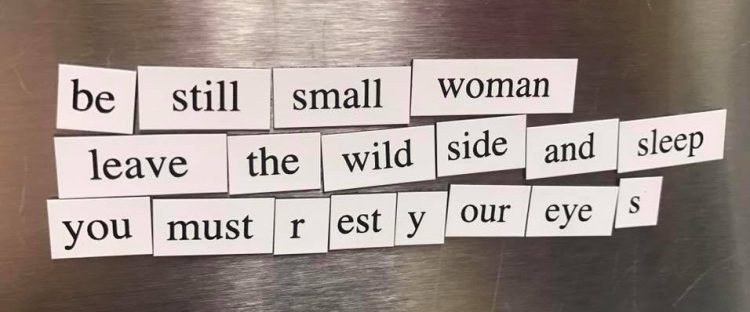
Source: https://bambooandbananas.org/truth-in-writing-ai-and-the-collapse-of-communication This shit is depressing. In a world where everyone has a motive in their stories, in their fake pictures and fake images, I don’t want to talk to anyone or see anything posed as real. It’s probably not.
https://bambooandbananas.org/truth-in-writing-ai-and-the-collapse-of-communication[1] I find it unfathomable that there are still people who believe in “free lunch” gimmicks. The only way to get something for free is by enslaving someone (or something — such as the price of energy, and my father’s story about how crazy [or simply stupid] people would incessantly repeat how energy was now “too cheap to meter” never gets old)
[2] cf. “Rational Media” [ https://phlat.design.blog/2024/01/14/rational-media ]
-
Waking Up to Basic Literacy Skills
A little over a week ago, I was yet again reminded of how poor the literacy skills of most people — even in some of the most “technologically advanced” countries on Earth — are. Indeed, this is perhaps best depicted in the movie “Idiocracy”, which I have often quoted on this blog already. [1]
My entire approach to information is very heavily reliant on literacy skills (sometimes basic literacy skills, sometimes somewhat more advanced literacy skills). There is little doubt in my mind that the apparently afflicted person lacking basic literacy skills in my most recent experience of this phenomenon would feel outright sanctified had her image appeared on the homepage of Google (or some other “prominent” or similarly “mainstream” irrational media website). [2]

Source: https://wants.blog/2026/04/01/the-moment-writing-starts-to-feel-like-an-obligation-rather-than-something-i-want-to-do-the-entire-exercise-loses-its-purpose In our times, “coming across” as literate oftens seems worthy of ridicule … most probably because such large portions of so many populations seem so severely lacking in such skills. Oddly, while the “cool” folks acknowledge that some of the most prominent leaders ever were undoubtedly among the most literate people ever … nonetheless they succumb to appealing to some Pope-like figure to absolve them of their own sins of illiteracy. [3]
Note, however, that even the Roman Catholic Church has resigned itself (at least for the time being) from its previous “infallibility” doctrine. [4]
Undaunted, the aspiring “tech giants” boldly continue to embark on missions to even greater heights, apparently making up their own laws along the way. And an ample supply of willing suckers line up to roll out their rugs and pay homage to the intimidatingly rising floods of AI slop at least 5 times a day (if not even 5 times a minute). [5]
[1] One of my most recent experiences of people lacking basic literacy skills is documented in “The moment writing starts to feel like an obligation rather than something I want to do, the entire exercise loses its purpose” [ https://wants.blog/2026/04/01/the-moment-writing-starts-to-feel-like-an-obligation-rather-than-something-i-want-to-do-the-entire-exercise-loses-its-purpose ]; for more about “Idiocracy”, see e.g. “More about Modes and Levels of Literacy“
[2] See “Rational Media” [ https://phlat.design.blog/2024/01/14/rational-media ] and also “Inter-Reliance, Self-Dependence & Responsibility“
[3] See “If Google is the Pope of the Internet, Then Who Are You & I?“
[4] For more about this aspect of “infallibility”, please see en.wikipedia.org/wiki/Infallibility#Christianity
[5] See also “There’s a Sucker Born Every Minute“

Social Business (WordPress weblog)
 Socio Business blog