-
When the Hitler-Youth Woke Up, They Found They Were Not Only Being Mesmerized, But They Were Also Being Starved to Death
Apparently one of the latest crazes is a song-and-dance piece being spread via TikTok called “They’re eating the dogs, they’re eating the cats”. Probably one of the main reasons this seems to resonate so well with today’s youth is the very bleak outlook today’s younger folks have on life (which I attempted to describe a little in last week’s post — see “Voiding and Avoiding the Void”).
During Hitler’s reign (i.e., Nazi Germany), there was a program called “Hitler Youth”, in which the next generation were “taught” all sorts of things, including propaganda. [1]
The Hitler-Youth youth was by no means overweight couch-potatoes. These children were being trained day in and day out to become active participants for Hitler’s cause. There was a regular regimen of group activities, to promote not only physical fitness but also group cohesion. Some such kids were so mesmerized by the Nazi propaganda that they would report their own parents to the authorities — who would then pick up the parents and send them off to concentration camps.
At the same time there was increasingly severe rationing. The entire population was increasingly being starved in order to support the troops — the troops, after all, were the ones putting their lives on the line to support the fatherland. Most of us know how this story ends. The soldiers were dying and being replaced with new soldiers. The new soldiers were becoming younger and younger, and in the very end even pre-pubescent children were sent off to fight in the war. Post-war Germany was peculiarly characterized by the lack of an entire generation of men.
What made the propaganda so successful (from Hitler’s point of view) was that it was a repetitive program ritualized day by day over the long haul. Luckily, the long haul only lasted a little more than a decade. Who knows what kind of world we might be living in today, had it lasted very much longer.
I wonder what happens these days, as children, adolescents and young adults grow up typing words into a search engine that spits out answers like there is no tomorrow. Last week (see “Voiding and Avoiding the Void“), I alluded to the extremely odd result which was given by a so-called “leading” search engine a few years ago during the CoViD pandemic — it basically said:
We are noticing you are asking our machine to answer a very strange question. This will now be investigated by our authorities.
Translation of Gobbledygook text (see below)
“This is just a load of crap” [ https://podcasts.video.blog/2022/01/08/this-is-just-a-load-of-crap ] If this were to happen often, would people stop using the machine? Or would they stop asking questions? Would they accept that this is anything like a normal world?
I have a little thought experiment for you to try at home. Think of a query for your favorite search engine that is so nonsensical and completely ridiculous, that a rational person would not be at all surprized if the machine responded with something like:
Are you a moron? This is simply gobbledygook! Please try again.
If search engines and artificial-intelligence algorithms could recognize Gobbledygook, they ought to show this as a result.In case you can’t think of such a query [2], I suggest trying “Google-Youth”. [3]
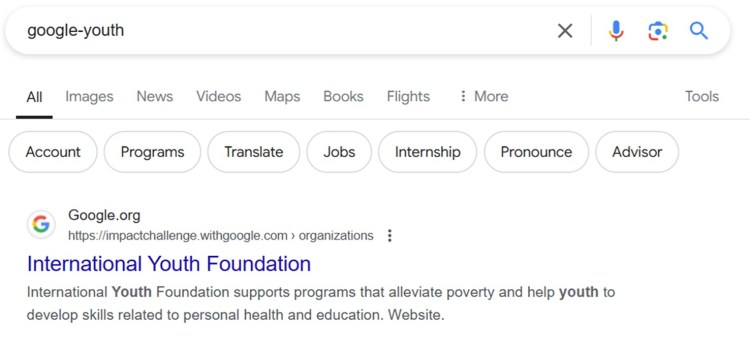
“Google-Youth” [ https://squ.data.blog/2024/09/26/google-youth ] [1] Note that normally, “propaganda” is thought of something as foreign, yet if parts of the “own” population are seen as dumb suckers, then it also seems appropriate here. See also “Propaganda Information Technology vs. Indigena Information Technology — the Basic Idea” [ https://indigenous.news.blog/2022/05/07/propaganda-information-technology-vs-indigena-information-technology-the-basic-idea ] and “There’s a Sucker Born Every Minute“
[2] See also “Would You Rather Choose a Book or Pick a Card?“
[3] cf. “Google-Youth” [ https://squ.data.blog/2024/09/26/google-youth ]
-
Voiding and Avoiding the Void
I have been writing about this stuff for decades, yet I have never (as far as I know) put it quite that way. Why do I put it that way now?
It’s actually not me — it’s other people. Every day I see people saying they are putting this or that or whatever “out into the void”. I think the reason they say this is because they feel extremely small and insignificant. They seem to have never seen “Coach Carter” or heard Marianne Williamson’s very fine quote in it.

source: Oscar the Grouch [ https://www.deviantart.com/username0hi0/art/Oscar-the-Grouch-162013804 ] They seem to feel more like Oscar the Grouch — and who can blame them? Increasingly, the world we live in is becoming ever more a world in which there is less and less future, and the present is becoming ever more a struggle, a turmoil in which we increasingly fight with our own families, wars and disease spread and blanket the Earth, and a future void almost appears somewhat like a safe harbor or refuge.
Like I said: that’s not my world. It’s an imaginary space envisioned by many who seem to lack the necessary literacy skills to be able to articulate and address the world of rational media. So instead they seek refuge inside a dreamy wonder-world of irrational media. [1]
This week I revisited a very fine articulation of the present state of affairs — see “Fighting the Good Fight” [ https://podcasts.video.blog/2024/09/18/fighting-the-good-fight ] for my gut reaction (and some following thoughts 😉 ). I too am increasingly frustrated with propaganda campaigns that seek to stupify the vast populations of people continually paying attention to so-called “mass media” … even though these bogus enterprises have repeatedly become disqualified time and again in recent years and decades. [2] Just about a week ago I yet again dragged myself out of bed on a Sunday morning to debate such a topic on a local radio program … and I fear that my comments may very well be censored by the local authorities who do not wish to have their mainstreaming enterprises questioned or disrespected in any way. In any case, the event was recorded and will be broadcast (whether cleansed or not [3]) in about a month (so in other words: long after the “fact”, and therefore by and large forgotten altogether).
[1] For a more detailed description of the distinction between rational media versus irrational media, see “Rational Media” [ https://phlat.design.blog/2024/01/14/rational-media ]
[2] See e.g. “This is just a load of crap” [ https://podcasts.video.blog/2022/01/08/this-is-just-a-load-of-crap ] and / or “Google Campaigns Against Donald Trump’s Re-Election in 2020 Campaign as President of USA (vs Joe Biden)” [ https://campaign.politics.blog/2020/11/14/google-campaigns-against-donald-trumps-re-election-in-2020-campaign-as-president-of-usa-vs-joe-biden-2020 ]
[3] See also “Cleansing Democracy“
-
Tolerable Perfection and Implications for Human Mortality
This morning I experienced a sort of “AHA!” insight that I want to share with you now — even if the ink on my haphazardly scribbled notes has not yet even had any opportunity to dry in the fresh, crisp early autumn air.
To provide more context, let me first add that quite a few things are within my environment and impacting my thoughts. First and foremost is a podcast I recently listened to and was greatly inspired by: an interview with Brenna Hassett on Alan Alda’s “Clear + Vivid” series of episodes — and here also quite specifically the focus the two placed on “infant mortality” (and how humans are particularly oriented towards perfection in low mortality rates for their own offspring). Other phenomena in my environment include the widespread and catastrophic severe flooding in eastern and southeastern Europe being reported on in mainstream media news channels, and / or also the other radio programming playing in the background of my daily tasks in the kitchen and whatever.

Brenna Hassett (source: https://www.bloomsbury.com/us/author/brenna-hassett ) And let’s not forget to mention my posts about “Living Here” and “More or Less is Better” from a few weeks back.
Now to the nitty-gritty details. Let’s assume that humans are indeed the most perfectionist species with respect to high survival rates (or low mortality rates). Let’s also grant humans that “leadership” position as if it were some kind of natural right. That said, it would be foolish to aspire to 100% perfectionism (my father used to remind incessantly that there is no such thing as 100% or 0%). So even though I just heard in the news reports that there is a (first) casualty as a result of the flooding, perhaps we should expect casualty to happen every now and then — we simply cannot expect to all survive forever.
The next question is: what degree (or rate) of casualty should we consider acceptable? The widespread norm is to respond by shouting loudly and clearly that no death is acceptable under any circumstances — and that is such a strong norm that it almost seems absurd to call it ridiculous. But I agree with my father in this regard: it is pretty much completely ridiculous (do you sense the irony of the term “completely“? 😉 ).
Well, let me propose a ballpark or a starting point where we can begin to (hopefully somewhat rationally) engage in this discussion.
First, let’s delineate “nature” versus “technology”. Nature is the world we were born into — fully naked and without living rooms, kitchens, cars in garages, or pedals we could put to the metal to go from here to there and everywhere and whatnot more in our daily lives. Technology also includes telephones and TV sets, hospitals and government buildings, war machines and power companies and much much more. Does that make sense?
To drive home this point and to make that caricature rather extreme, technology is the non-living stuff created by humans (note, however, that other life forms also engage in this kind of behavior — for example: birds build nests out of stuff we can consider to be more or less “non-living”).
Roughly speaking, humans employ technology (or technologies) to extend or enrich their own lives (or simply to make their lives more “comfortable”).
I want to argue that this is only acceptable up to a certain point. My ballpark estimate (or first approximation) of that point is: if there is another life form which has a higher survival rate (at a certain age) then it is still permissible for humans to extend their own lives by employing technology. In the extreme case, this also becomes ridiculous — in other words: since some plants live to be many hundreds of years old, it could be argued that humans would therefore also be allowed to extend their lives for hundreds of years using technology.
Therefore, I want to hasten to add the following exception. The technology employed by humans is unwarranted if it can be shown to decrease the survival rate of any other life form.
My “gut feeling” hunch is that this exception would pretty much make any use of any technology unwarranted.
I think where the devil is in the details is how certain we are able to become of anything — and here again: nothing is 100% certain (or 0% certain, or 100% uncertain, or whatever).
-
Weird
Weird seems to be one of those “Words of the Day”.
Last night, something occurred to me along those lines.
Often, when I warn people about the propaganda they consume regularly via Google, they mention something peculiar (or weird?) — that if they click on something, or type something into Google’s search box, that the propaganda engine will show them that kind of information for a long time. I find this weird, probably because I am quite unaware of it … because I no longer use any of Google’s so-called services.

source: “BIC Browser is Watching You“ People mention this so often, that I am inclined to observe it as the usual response. What I find peculiarly weird about it is the behavior it seems to lead to. Since most people are quite fanatical believers in Google [1], they cannot seem to fathom that life without Google might be not only possible but even quite pleasant. Instead, they cling to Google like Linus clings to his security blanket, [2] Therefore, instead of abandoning the propaganda engine, they refrain from clicking on anything of typing anything weird into search box. They do realize that doing so is sort of like confessing something to the Pope of the Internet. [3] They worry about the repercussions of such confessions, Yet they apparently have little or no qualms at all about making an apparently innocent confession every now and then.
For example, I have a friend who quite regularly barks a few words into his phone to get a radar image depicting the chance of rainfall in the area. This reminds me of a researcher I knew in the voice recognition field who often joked that he had adapted his own speaking to optimize the results, but I am also aware that the voice carries lots of information regarding the psychological state of the speaker, and this is a field of research that actually garners a lot of interest.
What I find odd about all of these things is the degree to which people feel secure about giving information to Google. Most people do not even realize they are doing so … pretty much all the time. And they even (supposedly) agree that the company can use all that information (although I doubt that they realize that Google is using that information to manipulate them. [4]
[1] see also “Some Reflections on the Relationships Between Influence and Rationality“
[2] see also “Learning to Understand Irrational Information Retrieval“
[3] see also “If Google is the Pope of the Internet, Then Who Are You & I?“
[4] see “Google Campaigns Against Donald Trump’s Re-Election in 2020 Campaign as President of USA (vs Joe Biden)“
-
Some Reflections on the Relationships Between Influence and Rationality
I have spent a lot of time with the exact formulation of that title. What is a lot? What is a little? Somehow this line of thinking reminds me of the Pensees / Blaise Pascal, and the title itself seems situated nearby to Descartes’ Meditations yet perhaps even closer to Edmund Burke’s flowery view from a distance away upon France. [1]
For me, rationality is closely related to the mathematical relationships within ratios … and how numerator and denominator relate to one another. There is a strong accent of perspective here, a relativity … a judicial weighing of different points of view. In the extreme case, this leads to a pluralism of perspectives, such that plain and simple concepts such as “true” and “false” (or “right” and “wrong”) become superfluous.
In contrast, influence comes across as completely straight-faced declarations regarding undoubtable statements of fact. These statements may be completely bogus or claimed as valid reflections of reality. Their validity stems from something completely different: quasi-religious beliefs. [2]

for image source, please see “Human Resources are the Disconnect at the Intersection of Do-It-Yourself and Highly Regulated Markets“ The main reason why I say quasi-religious is that most people believe things without realizing their beliefs are a kind of religion. On the contrary, most of these folks will vehemently argue against religion — religions are crazy organizations for crazy people.
I myself have also been a fan (remember: that’s short for “fanatic” 😉 ) of this, that or the other thing. Yet these days, idols and idolatry have essentially become blacklisted in my own outlook.
Instead, I feel much more motivated by nature and the natural forces of natural language. I (too) believe in the underlying evolutionary principles which separate indigena from propaganda.
[1] Blaise Pascal “Pensées”, Rene Descartes “Meditations on First Philosophy” (“Meditationes de Prima Philosophia, in qua Dei existentia et animæ immortalitas demonstratur”) and Edmund Burke “Reflections on the Revolution in France”.
[2] A related image might be George Orwell’s “Big Brother” speaking poker-faced from a screen installed by authorities (or “leaders”, or “influencers”, etc.).
[3] See in particular both “Propaganda Information Technology vs. Indigena Information Technology — the Basic Idea” [ https://indigenous.news.blog/2022/05/07/propaganda-information-technology-vs-indigena-information-technology-the-basic-idea ] and “Rational Media” [ https://phlat.design.blog/2024/01/14/rational-media ].
-
Dumb Americans
I sometimes have a way of saying things that people find awkward or even inappropriate, and I have a hunch the title I have chosen here is at high risk of becoming one of those situations.
There is a lot to unpack here, and I don’t know if I will be able to unpack all of it in one post. I have addressed some of the issues involved before (see, for example, “There’s a Sucker Born Every Minute“), but I want to try to clarify one very sticky point right at the outset — that being the word “dumb”. This word actually has several meanings, and not only do I wish to accentuate the meaning known as the inability to express oneself [1], but I also wish to deviate from this meaning insofar as I am not particularly concerned about spoken language or interpersonal communication, but rather aim to draw attention to issues revolving around written language and very distinctly the written language used for communications “on the Internet” (see also “What is Publicacy + Why does it Matter?” for more about this issue).
Let me start off by stepping back and zooming out to more of a “bird’s eye” view. A few decades ago the web was abuzz with the term “disintermediation” — and I was somewhat skeptical of the way it was being bandied about. Around that time, I chose to focus on an alternative term (which was not widely recognized — and had perhaps even lost its original meaning): “remediary” [2].
As I have mentioned before, I intend to collect the articles I wrote in the “remediary” context and may release the collection as a sort of coffee-table publication (or maybe as a toilet accessory? :p ) at some point (if and when I ever get around to it).
In so-called “real life”, the world has moved on from the wild and crazy beginnings of the Internet. What do we see today as a result of the supposed processes of “disintermediation“? Have all media companies been successfully annihilated?
Hell, no! Quite the contrary! We now have supposedly new and improved media companies — and for the most part, what is supposedly particularly new and improved about them is that they are immensely more manipulative than the manipulative media of yore ever were.
So (for example) one of the simplest and most straightforward methods for figuring out which advertising and marketing campaigns are most active in any industry is to simply do a “Google” search for that industry’s most well-known buzzwords. The top 10 results are normally not only littered by hugely exorbitant marketing and advertising budgets — they are pretty much completely covered in them. [3]
While Google is definitely the worst culprit, it is by no means the only one. And just like the “Rest of the World” seeks to emulate Americans, so too all other brand names seek also to emulate the leader of the pack.

David Bowie appearance on the Dick Cavett Show to present his newly released song “Young Americans” (source: the world’s leading online piracy platform [youtube.com] ) People’s inability to express their own ideas is indeed the very same problem as leading brands’ ability to manipulate these people. It is a global problem: worldwide, followers are following leaders — and they simply believe in them (see also “If Google is the Pope of the Internet, Then Who Are You & I?“).
[1] More narrowly, “mute”
[2] This was originally related to the term “remedy”, but I was in part re-introducing it as a matter of “re-mediation”, in the sense of re-organizing the process of mediation.
[3] Note that this is no accident. At the seminal “Press Day” to which Google invited all the so-called “leading” companies, Google’s VP of Engineering addressed the crowd with the explanatory example that “creditcards.com” would be removed from the results so that all the major brands of the day (for which he provided explicit examples) would be featured prominently in the so-called “Top 10” results. Today, over two decades later, we clearly see the results of this monetization model, yet most people probably do not remember (if they were ever even aware of) the fact that the business model is based on a very significant act of censorship. Most people even forget the multitude of anti-competitive legal battles the world’s leading manipulation engine is embroiled in time and again, simply because it regularly censors companies that dare to operate in its own industry (and which also refuse to be acquired by the world’s largest propaganda behemoth).
-
Sometimes I Feel So Proud to be Maladjusted
I have — time and again, over the years — repeatedly expressed my wonder, amazement and immense awe at the awesomeness of martyrs. Each and every time I have done so, I have also expressed my belief that all martyrs are crazy. Although I find it difficult to hold on to both of these beliefs at the same time, I think the way I am able to reconcile the two is that whenever one such martyr is eliminated, such elimination does not actually disqualify the martyr or his / her character in any way … instead my hunch is that the process of elimination automatically invalidates anyone or anything responsible for the act of elimination. I can quite simply express this as an obvious fact: Eliminating someone is a cardinal sin.
(As an aside, see also “Cleansing Democracy“)
I think of the title for this post as a mashup of a song by the name of “Sometimes I Feel So Uninspired” (by
Ten Years AfterTraffic / Steve Winwood) and a speech given by Martin Luther King in which he emphasized how in some respects he was “proud to be maladjusted“.Yet the reason why I want to write this today is that I myself am somewhat maladjusted to ideas expressed in another episode of the “Braver Way” podcast (an earlier episode of which I mentioned a few weeks ago — see “Living Here“).
In this new episode (“How can I change their mind?” [ https://braverangels.org/a-braver-way-episode-14 ] ), Monica Guzman converses with David McRaney about a variety of topics, one of which is Mr. McRaney’s concept of “social death” (which is, roughly speaking, the feelings a person encounters when they become ostracized — or in more modern lingo: “cancelled”).
In contrast to the disdain I hope to have evoked at the social sickness of ostracization, the conversation in the podcast revolved more around understanding the phenomenon as if it were normal, healthy or something like that. In my opinion it is definitely not healthy (though it may be somewhat normal — in other words: a rather mediocre behavior).
Much like it seems to be extremely courageous to step into the role of a potential martyr, it seems to be extremely lacking courage to step into the role of a conformist (and a potential “Mitläufer”).
-
Case Study in the Contrast Between Rational vs. Irrational Media: “I Don’t Believe in Beatles”
This week was no exception: Every week is another week in which I try to fathom why there is such widespread trust in irrational media; and every week I find it ever more difficult to fathom.
And yet this week also provides a few exceptional cases (which are actually probably quite predictable, as the propaganda leading up to the presidential elections in the United States ramps up). Since women and children come first: Taylor Swift. Another celebrity, making his second appearance (see also “What’s X?“): Elon Musk.

source: https://en.wikipedia.org/wiki/File:Taylor_Swift_at_the_2023_MTV_Video_Music_Awards_4.png 
source: https://en.wikipedia.org/wiki/File:Elon_Musk.jpg These are irrational media, as are “Beatles”, “John” and “Yoko” (and all other undefined strings). [1] Elon Musk is perhaps a special case, insofar as one of his projects has apparently finalized the transition from a rational medium into an irrational medium. After numerous years of mismanagement, Mr. Musk has essentially pulled the plug from “twitter”, which was once a term central to the language of marketing. [2]
Since I have already covered the case of twitter.com at length (again, see also “What’s X?“). I wish to focus on the other cases I have mentioned.
Let me point out that that the language of songs is also a special case — and I do believe that the Beatles (and in particular John Lennon and Paul McCartney) were pioneers in the popularization of this sort of “jingle” marketing gimmick. I have little or no doubt, however, that there probably also existed (and still exist) large teams of marketing consultants in the mix of things that singing celebrities might sing to vast audiences — in both The Beatles’ and Taylor Swift’s cases, that’s mostly huge crowds of teenagers — ecstatically screaming at the top their lungs, incantations for mesmerized followers to memorize and dream about day and night and simply, in general: all the time.
I am aware of studies of the language of songs. The vocabulary is extremely basic. The refrains are repeated often. This media is a marketer’s dream come true — whether for umbrellas or for democracy. [3]
Now that I have already droned on for quite some time, I will leave the rest as a “homework” exercise for my readers: Who actually called off the Taylor Swift concerts, and who actually called out Elon Musk for lying?
[1] “Rational media” [ https://phlat.design.blog/2024/01/14/rational-media ]
[2] Note, however, that because I have been monitoring this field for several decades already, I have seen many such cases of supposedly “bankrupt” terms rise again from the ashes (like the metaphorical phoenix) — perhaps one of the first and most prominent (i.e. widely recognized) of such examples being pets.com .
[3] In case you missed it: “umbrella” is a nod to Rihanna’s song “Umbrella”.
-
More or Less is Better
As an undergraduate student, I studied Economics (and History — I actually have two Bachelor’s degrees, a sort of “multitasking” achievement of mine 😉 ). One economics professor of mine had a rather profound impact on a lot of my thinking about economic theory. One of his phrases about the philosophical attitude of a lot of economic thought was “more is better” (which I now sometimes wonder about — insofar as: was he completely serious?). My hunch is that he was actually poking fun at how simplistic this attitude is, but it is indeed very much front and center — for example, in the formulation of a “Pareto optimum” (I’m now also wondering whether and to what degree this idea suffers from merely identifying local-optimal cases, and thereby perhaps failing to search for more optimal cases).

source: https://en.wikipedia.org/wiki/Vilfredo_Pareto It was only a few days ago that I began to consider this quirky quote of my professor’s and Pareto’s guiltiness in coming up with such a fallacious statistic (and in particular being astounded about this fallacy, insofar as Pareto was apparently quite a mathematician — how could he have been so naive?).
My gut feeling is that it took me several decades of very deep thinking about language (and its central role in scientific research) until the coin finally dropped a few days ago — or rather: began to roll, as I cannot say yet whether anything “worthwhile” is actually going to drop.
This puzzling has also motivated me to look up a text which I have never actually read before, but which has nonetheless been quite influential on my own work: George Kingsley Zipf’s “Human Behavior and the Principle of Least Effort”. A significant portion of my own work is very much based on “Zipf’s Law”, and this law was apparently only an example of Zipf’s central interest — namely, the “Principle of Least Effort”.
I reminded myself of this title not only because I was familiar with it, but because I was pondering: how could we humans organize a world in which we simply make enough, rather than always seeking growth? If the goal were something like reaching a sufficient level (of happiness or whatever), then I concluded that the most reasonable constraint seemed to be the minimization of cost, expenses, … or as Zipf put it: effort.
I don’t expect this to be a simple and straightforward matter. It hardly seems likely that the laziest workers ought to be the most sought after candidates for any job. My hunch is that this perspective will require much more attention to be paid to the quality of goods and services produced rather than simply focusing on the quantity output of standardized whatever.
-
Quantity vs. Quality (Upside-Down Version)
A few weeks ago, I contrasted some aspects of quantity vs. quality. (see “Quantity & Quality“). Here, I want to revisit that general topic, from a very particular point of view.
In mulling over this topic, I also considered a few related ideas, but pushed them aside, because they would probably open huge cans of worms — such as: “does democracy work at all?” or “are democratic principles always better (than non-democratic ones)?” For me, one case which seems to be a prominent counter-example is quite generally medical decisions, or in particular questions about such matters as a tooth-ache. I think only extremely foolish people would let a poll of random people decide over such decisions, in which very specific kinds of knowledge and expertise are called for.
Yet today, such popularity contests seem more popular than ever before. Pretty much every Silicon Valley startup in the past couple decades has been guided by the nonstop mantra of growth — tallying numbers and statistics like there’s no tomorrow.
The resulting universal fixation on celebrity status leads to an overindulgence on gigantic proportions. Due to the widespread inflation of bubbles, only the most over-inflated bubbles are able to stand out like Kim Kardashian did once when she became the first celebrity to break the Internet.
Such astronomical numbers rely on suckering masses of suckers with an extravagantly rich menu of free lunches. ACT NOW to become a member of the crowd phenomenon. Herds rush in, swarms swarm around, the general activity of swarming and swooping and whatnot more leads to a dizzying buzz, humms and whirring noises abound, sensationalism for all the senses floods the markets and data streams into every nook and cranny.
Gluttons for bits and pieces of action are having their heyday today. If there is one thing you can count on, it’s that in Silicon Valley there is someone who is willing to count it up — whatever IT is. Whether bugs or gnats, machines or molehills, empty spaces or mouse overs, if the growth is sufficiently up, then it’s fit to squint at and envision the endless opportunities.
In contrast, an individual opinion is greeted with skepticism. If a person is alone, then they almost appear abnormal. This is despite the obvious fact that a specialist is almost by definition a special case.
When I myself am aware that I am not knowledgeable regarding some issue, I not only welcome the expertise of a subject-matter specialist, I actually seek out such experts rather than to simply refer to the results of some more-or-less arbitrary public opinion poll. That is one way in which my approach to information seems to be very different from the approaches taken by some of the most popular Silicon Valley darlings — first and foremost Google (yet the reader is advised to note that Google doesn’t actually scour the entire Internet any more; today, the company gives much more attention to their paying customers, also known as advertisers).

source: https://en.wikipedia.org/wiki/Upside-down_cake

Social Business (WordPress weblog)
 Socio Business blog