
Of course the word “fascism” is a loaded term. Let alone that the term was invented by some short pudgy Italian only about a century ago. What does it mean? He might have known, but in the meantime (now, a century later) the term has been applied so often in so many contexts that it seems like little more than the perfect prototype for quintessential newspeak.
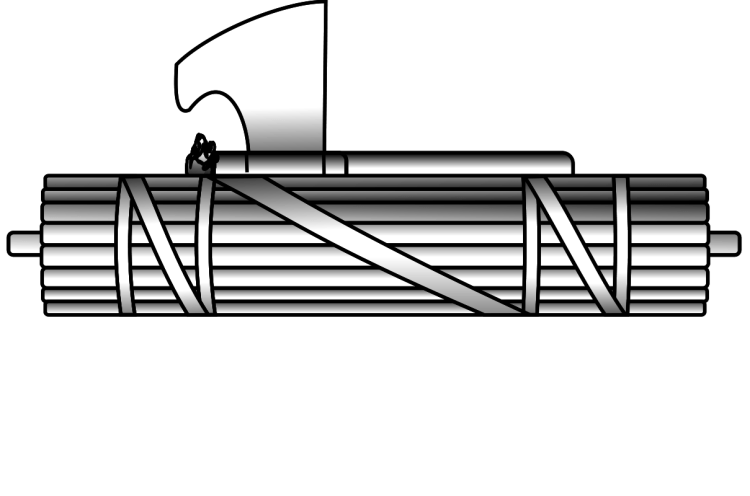
As I sketched out in one of my first blog posts (“What is the Primary Goal of Social Business?“), one of the main focal points of “Social Business” is the struggle between two opposing forces (roughly: freedom vs. government) and I find it intriguing the way one of the defining characteristics for “fascism” is a supposed alliance between government and business interests (a vague amalgamation roughly aligned with concepts like “capitalism” or “bourgeois”).
Not only during the past century, but also in particular in the last few years the world has experienced such alignments in the realm broadly referred to as “media“. My hunch is that a big part of what precipitated this “when the shit hits the fan” moment is the Internet … which is now like a genie that’s gotten out of the bottle.
Before concentrating on the latest news, let me backtrack a little and give a brief overview and historical context to the notion of “regulated media“. I guess I don’t need to go all the way back to the dawn of civilization, but let me nonetheless make a broad blanket statement that somehow a small number of “elite” kind of people wrote stuff down like it was some kind of message from God (and therefore ordinary people should shut up and listen). This was more or less the case everywhere for many thousands of years.
Then what happened is: a lot, more or less all at once. A little over half a millennium ago, many discoveries were made … and the “printing press” (with movable type) was invented. Discoveries plus a booming business with printing presses proved quite explosive, and shortly thereafter the first attempts to regulate media sprung up like springtime in full bloom. The times were ‘a’ changing, including not only reformations but also revolutions. Things were getting curiouser and curiouser, maybe even a little out of hand, which eventually led to the short pudgy Italian who invented “fascism” — perhaps mainly in order to prevent “communism“.
By this time there were already quite a lot of regulations “on the books” about books and stuff like that. They had dribbled in sort of piecemeal over the intervening centuries, but had definitely “taken off” in a more significant way since the new & improved invention of offset printing had made widespread literacy much more of a feasible prospect.
Once widespread literacy had been — more or less — established, a new avenue for regulating and controlling media could be opened: the central regulation of strings of characters. This allowed governments to get a foot in the door into the business of regulated media. This was the birth of privately owned strings. Allowing one entity the right to its own definition of a particular string of letters was undoubtedly a novel idea. Up until this point, such strings of characters had always been a mutually agreed upon matter (by the community of “speakers” of a language). Increasingly, governments are selling off more and more such strings all the time, as we speak, here and now (and presumably for forever more?).
Regular ordinary folks like you or me generally don’t think about this very much … mainly because these strings seem like Greek to me (or maybe like Chinese or English to a Greek person?). Besides: this is only one form of media regulation. There is another form that might be even more significant, at least in some ways.
Over the past century or so, the entire business plan of Gobbledygook strings has been established, developed and expanded significantly. As they exist today, each Gobbledygook string company functions more or less like a marketplace, bringing together supply and demand for something (in the case of media companies, roughly the supply and demand for ideas). Three parties are involved: the supplier, the demander, and the marketplace administrator. The administration of a marketplace leads to transaction costs, and these must be recovered from one of the other two participants (plus a little amount of profit, in order to keep the administrator from wandering off to do something else instead).
Since information wants to be free (see also “All Your Data Are More Free to Us“), but also in order to present an image of impartiality, media companies generally gravitate towards getting someone else to cough up the money. Early on, these “others” were more or less random entities (aside from the very early times, in which they were generally entities with some “axe to grind” of their own), but increasingly these others are other entities with their own manipulative interests. Gobbledygook media companies themselves are increasingly on the verge of bankruptcy, subsisting only on arbitrage, while others make more of a killing through their manipulative engagements.
Since almost all companies today are Gobbledygook companies, they are all regulated by government regulations concerning Gobbledygook strings. In addition, Gobbledygook media companies are also regulated by other entities which pay for their ability to economically subsist. The motivation for these other entities to engage in these marketplaces is in order to manipulate the suckers who hope to find information in the marketplace.
Which lessons from the past few years obviously lead to this conclusion are left as an exercise for the reader.

 Socio Business blog
1 comment