
For anyone unfamiliar with what a steroid is, … well, I’m sorry but I don’t know that much about steroids either. Essentially, they are like wonder-substances which make organisms grow … and especially also to make muscles grow, and they are apparently used by people with athletic aspirations to help them become miraculous machines. In common language, the term “on steroids” is used to say something is simply increased very strongly, to something like a gargantuan scale.
In this post, I want to extend the idea behind the previous post (“Mainstream Milieus“) along one particular tangent — the mainstream media genre usually referred to as “talk show”, which has now suddenly become stunningly popular again in a “new media” format, the podcast. I have titled this post “Celebrity Talk Show”, because today it is simply implied that any person appearing as part of the cast in such a talk-show or podcast interview must be an extraordinarily celebrated person, and not some ordinary worker who does nothing more than household chores day in, day out, 24/7/365. The ins and outs of cleaning a toilet simply don’t translate all that well into much of an interesting conversation.
The reason I mentioned the phrase “on steroids” at the beginning is that I view this post as a “mashup on steroids”, insofar as I will also integrate observations from a wide variety of previous material, all of which I intend to mashup into one gargantuan snowball I aim to fling out into the void (haha, for more on this little chuckle, see “Voiding and Avoiding the Void“).
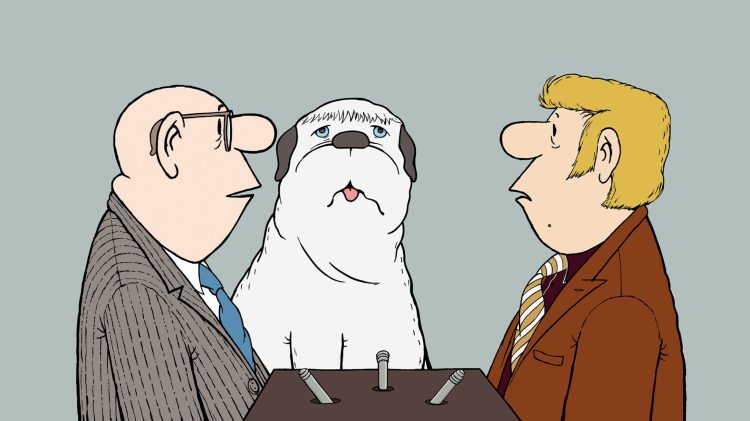
First, let me start off by referring to a note I wrote about the psychology of symbolism revolving around celebration, celebrated persons, celebrity, and thereby stunning the consumer audience into awe and amazement. This is easily done — very simply by positioning pointed microphones in front of the celebrities (for more on this, see “The Smartest Person in the Room“). Of course other theatrical constructs, such as a stage, or simply using several cameras and switching between them, perhaps sometimes also including “split-screen” views from different angles and such, and the suckers in the consumer audience will be wowwed and entertained in seconds. There’s no need to go overboard with flashing lights, but I guess whatever does the trick is good enough to sell almost any product.
In this context, I will once again call to attention a few academics who were extremely influential (at least for me) in the fundamental foundations of such organized media productions. First, over half a century ago, “The Social Construction of Reality” (by Berger and Luckmann). This seminal work was truly groundbreaking in presenting the immense complexity of modern societies. Above and beyond that, “Manufacturing Consent” (by Herman and Chomsky) presented a detailed analysis of the organization of publishing industries and crucially also the the socio-economic (and regulatory) motivations behind them. While many of the case-studies I present here span many centuries and situations from many countries across the globe, a thorough reading of these two works provides what I consider to be a thorough understanding of the “media landscape“. Granted, they are decades old, but nonetheless I feel they are far more insightful than most of the other stuff I have seen in the several decades since then.

 Socio Business blog
1 comment