
I think I have (so far) never yet felt like the smartest person in the room. There seems to be a somewhat common saying (though I think I’ve more often seen it printed than actually said) that goes along the lines of:
If you’re the smartest person in the room, then you’re in the wrong room.
common saying (no known particular historical source)
If I think of some of the smartest persons I recall from stories about their existence, many or even most of them were outcasts from the worlds they lived in. [1]
One thing about such sayings which seem to get repeated time after time is that over the decades and perhaps even the centuries during which they get repeated the individual words gradually change their meanings, the concepts become ever more distant from the contexts in which they were conceptualized, and so on.
I believe this is also the case here. “Room” used to be a much more significant concept than it is today. Time and space are becoming ever more fictional constructs we use to orient ourselves in the world, but which also seem quite unfounded. I recall reading a text decades ago in which the author succeeded in “blowing me away” with the suggestion that “localisation” was becoming ever more important, yet that it was also becoming ever less meaningful in its geographical sense.
Likewise, whenever there is talk about breaking up some corporate structure, I wonder whether the people engaged in that decision-making process are at all aware of the insignificance of legal documents when the real deal is about things like propaganda, influence, etc. Yet I digress….
Whether being the smartest person means that you are in the right room or the wrong room, whether being the smartest person is a good thing or a bad thing — it all depends on what that smartest person wants to achieve.
If the smartest person wants to learn something new, then being the smartest person (or even just feeling that way) might be a problem.
On the other hand, if the smartest person wants to produce wisdom rather than to behave as a consumer of wisdom, knowledge, insight, whatever … then that may very well be a useful situation for all persons concerned (provided the other persons are likewise interested in learning something about the topic the smartest person apparently knows the most about).
So what does this have to do with ordinary people living ordinary lives in the ordinary world?
Well, I think most people are always (more or less) curious to learn something new. Indeed, the world we live in is built out of many socially constructed markers that are used extensively throughout our everyday lives. These constructs organize a lot of information. Let me give you some examples. First, ever since time immemorial, pulpits have been used by preachers. Every day, people working in a wide variety of fields employ uniforms to signify their level of authority. Likewise, innumerable types of documents and symbols are used day in and day out ranging from a courtroom gavel all the way down to the registered trademark printed on the wrapper of many things a person might pop into their mouth on a daily basis.
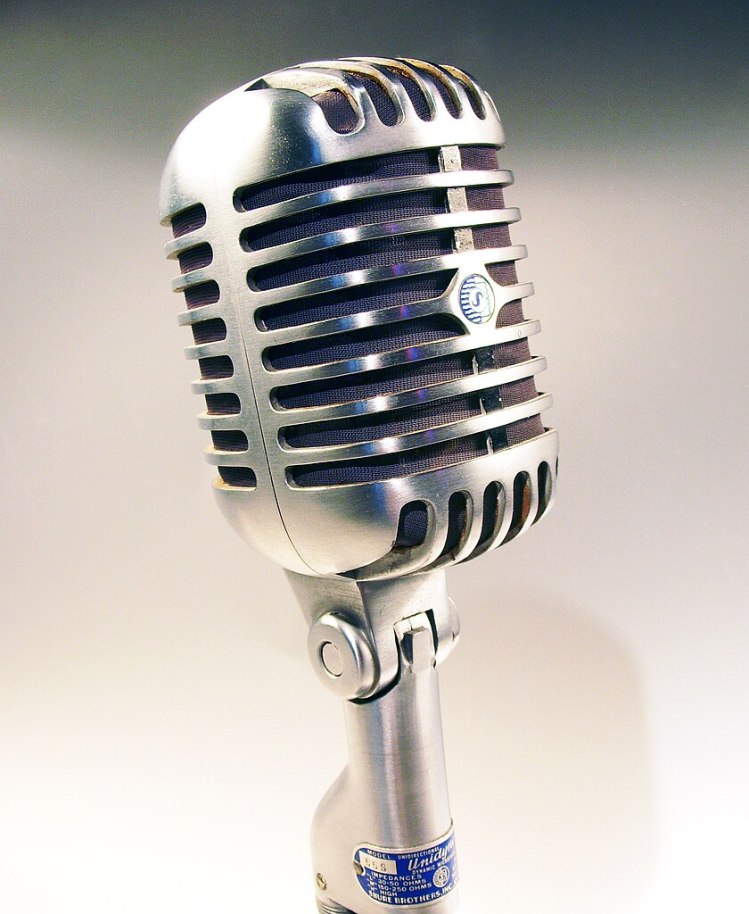
One of the newest and most prominent symbols in widespread use today is the microphone. In recent decades, high ranking people would often appear in front of many microphones. And even today, very large and obviously significant microphones are very openly and visibly on display in front of people to make those people appear to be the smartest person in the room.

 Socio Business blog
1 comment